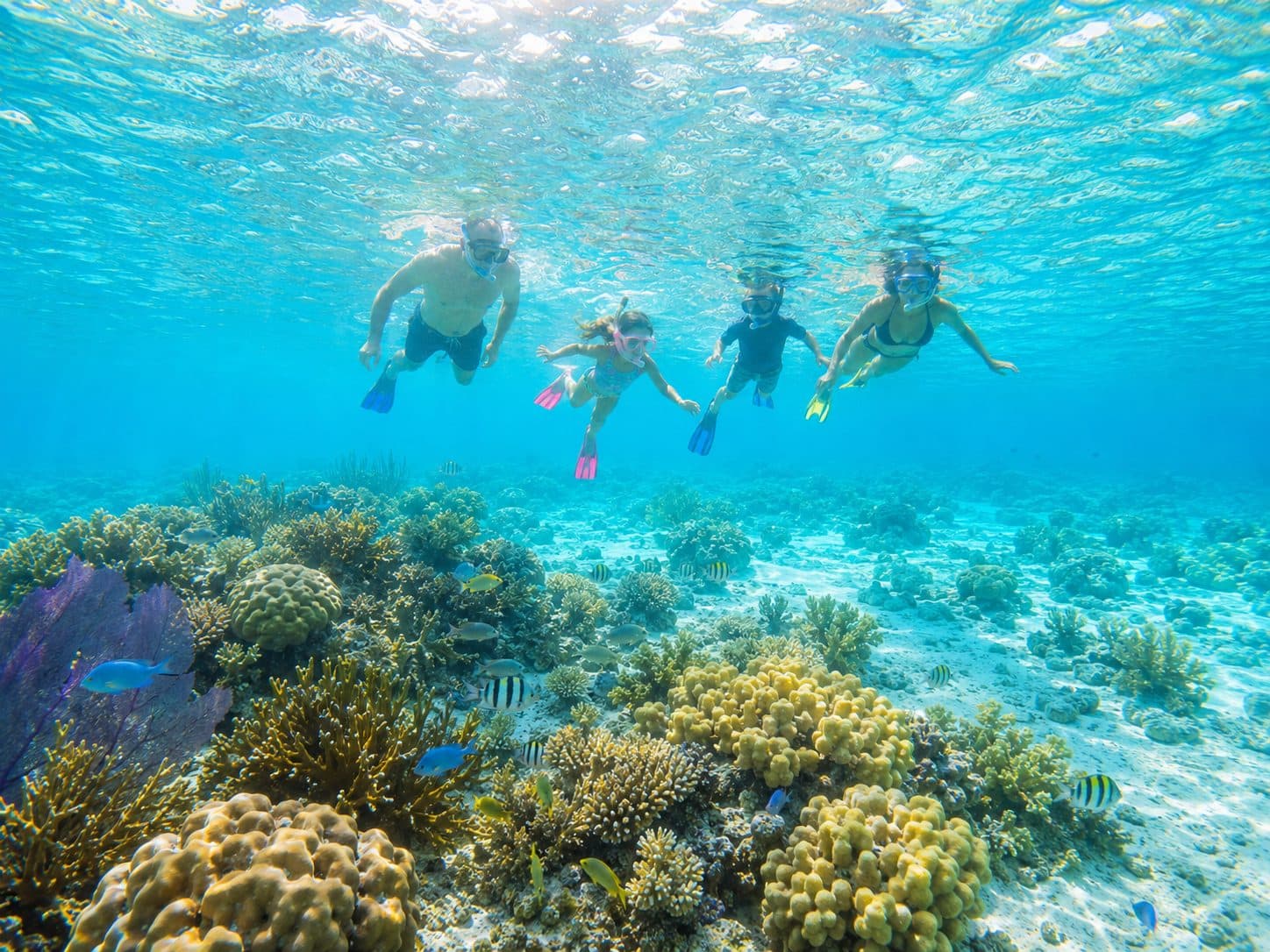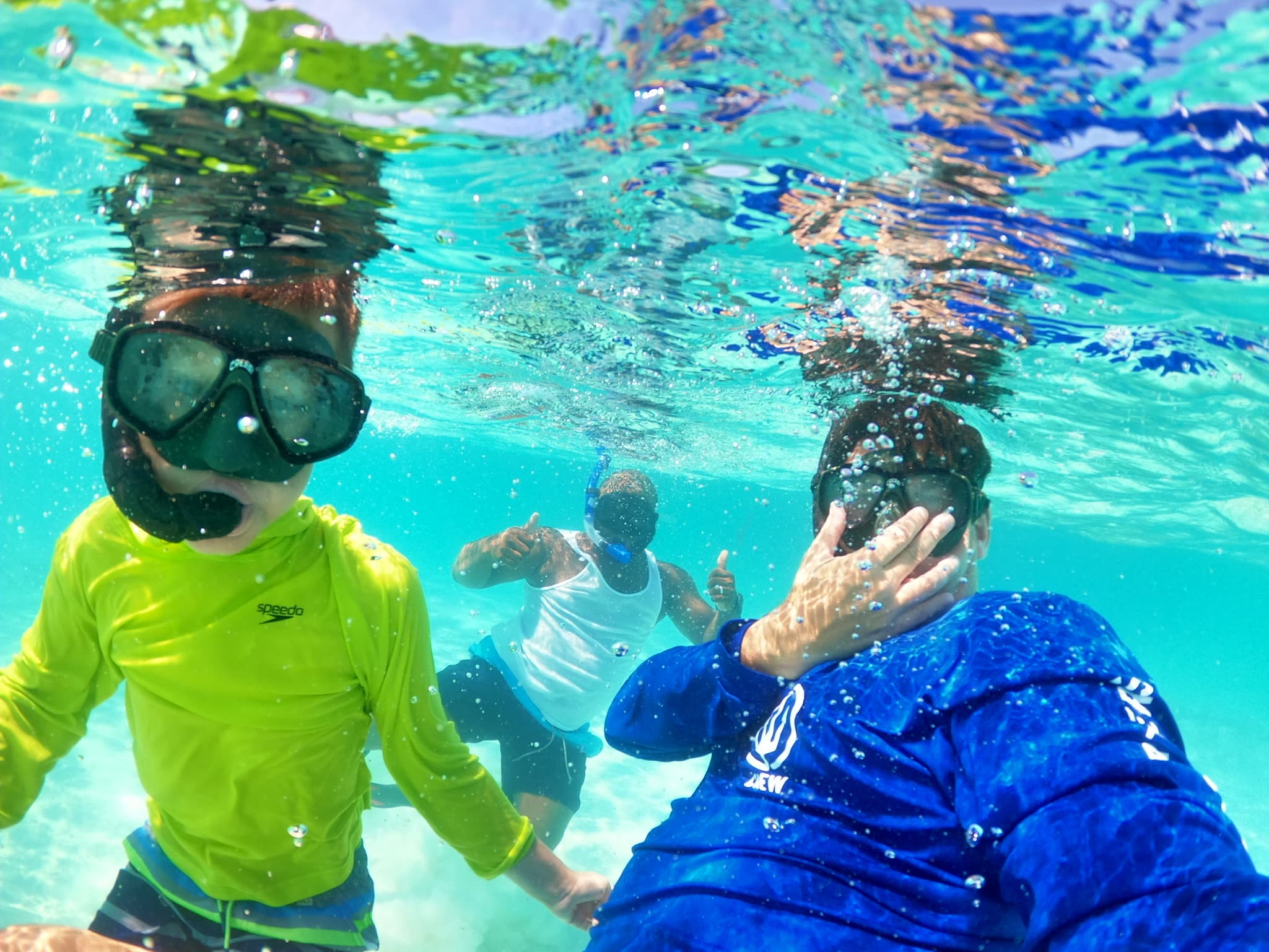
The water in Turks and Caicos is so clear that you can watch a turtle surface from the deck before you’ve even put your mask on. Snorkeling here is less about finding something to see and more about choosing where to look: a barrier reef, a sandy flat full of rays, a channel where young sharks cruise the shallows.
A private boat takes you to the best of it on your own schedule. Here’s where you’ll snorkel, what you’re likely to see, and which charters suit beginners and confident swimmers.
Snorkeling by boat at a glance
- Where: the reefs off Leeward, Grace Bay and Pine Cay, and the barrier reef along the north coast.
- What you’ll see: turtles, rays, reef fish and, at Half Moon Bay, young lemon sharks. Dolphins, if you’re lucky.
- Gear: snorkeling gear comes on every charter.
- When: any month. The water stays between 78 and 85°F, coolest in February and warmest in August and September, and humpback whales pass through from January to April.
- Best for beginners: a private boat, so you can start in calm, shallow water at your own pace, with a life jacket if you want one.
1. Where you’ll snorkel
Think of the reefs around Providenciales in rings. Closest in are the patch reefs you can swim to from the beach. Farther out, the barrier reef runs along the north coast and takes the ocean swell, and past it the bottom falls away as the wall. South of the island, the shallow Caicos Banks stretch toward South Caicos. Here are the places worth knowing, from the beach outward.
From the beach: Bight Reef and Smith’s Reef
You don’t need a boat for these two, and it’s worth doing one before your charter. Bight Reef, off Bight Beach at the western end of Grace Bay, is a coral ridge running about 350 feet out to 15 to 20 feet of water, with turtles and stingrays that are used to people. Smith’s Reef, by Turtle Cove, is healthier and less visited, with eagle rays in the channel off its western access. Both are free, both have public beach access, and both are in Princess Alexandra National Park.
Inside the barrier reef, and on it
Between Grace Bay Beach and the barrier reef lie scattered patch reefs with plenty of coral, good visibility and fewer fish, a short boat ride from the beach. The barrier reef itself is where the sea fans, the big parrotfish schools and the odd reef shark live. Leeward Cut, at the island’s northeast end, is the most visited snorkel site in the country: sea fan beds, small gullies and caves, and long spurs of coral divided by sand. Farther east, off Water Cay and Pine Cay, the reef keeps going, with natural arches on the barrier off Water Cay.
The wild northwest
The northwest tip of Providenciales is a marine national park with almost nobody in it. Malcolm’s Road Beach, at the end of a three-mile unpaved road, has reef running from the sand to the wall, whose top sits at about 50 feet before it drops past 7,000 feet. It’s the island’s best shore spot for freedivers and no place for beginners. Just south, Flamingo Creek Bay is often called the best beach snorkeling on the island and is hard to reach by road, and Wiley Cut, a pass through the barrier reef, has some of the finest sea fan beds in the country. On a calm day, from a boat, all three are straightforward.
West Caicos and French Cay
West Caicos, uninhabited and 45 minutes to an hour by boat from Leeward, has a marine national park along its west coast, where the wall begins about 40 feet down and falls to roughly 6,000 feet: elkhorn coral, purple and yellow sea fans, turtles, eagle rays and the occasional reef shark. French Cay sits 18 miles south of Providenciales on the Caicos Banks, a bird sanctuary for sooty terns and brown noddies where landing needs permission; in June and July nurse sharks gather to mate in the shallows on its sheltered side. Both are full-day trips, both depend on a calm forecast, and the scheduled cruises rarely go.
The south side and the banks
South of Providenciales the water is shallow and sandy, with small coral heads 10 to 15 minutes from the island where juvenile spiny lobsters and baby lemon sharks hide. The reef gets better the farther you run toward South Caicos. The La Famille Express sits in a few feet of water off Long Bay, with starfish around her and her propeller and anchor on the sand; snorkel her when the water allows, and keep an eye on the jet skis that circle the wreck.
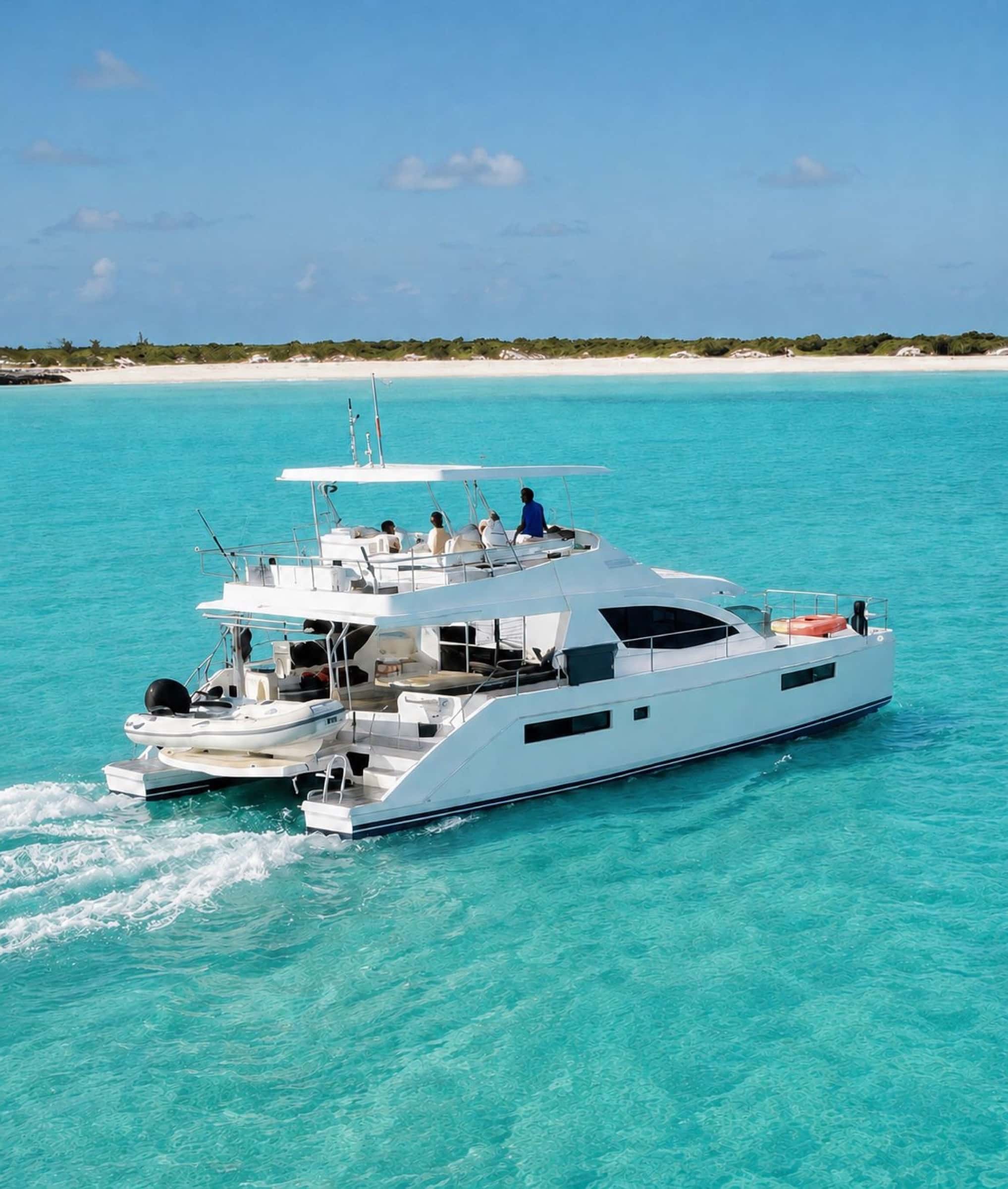
On a private boat, you and the captain choose the stops, so you can snorkel twice, or stay at the one you love.
How a snorkel stop runs
The captain picks the reef on the morning, from the wind and the swell, and that’s the one thing we tell every guest: let the captain choose the spot on the day. A stop starts with a short briefing and a gear fitting, then you go in off the stern and work along the reef with the boat in sight, for as long as you like. If the sea is up, the captain swaps the snorkel for a sandbar or the lee of a cay, because snorkeling is the first thing rough water spoils.
Snorkeling charters


2. What you’ll see
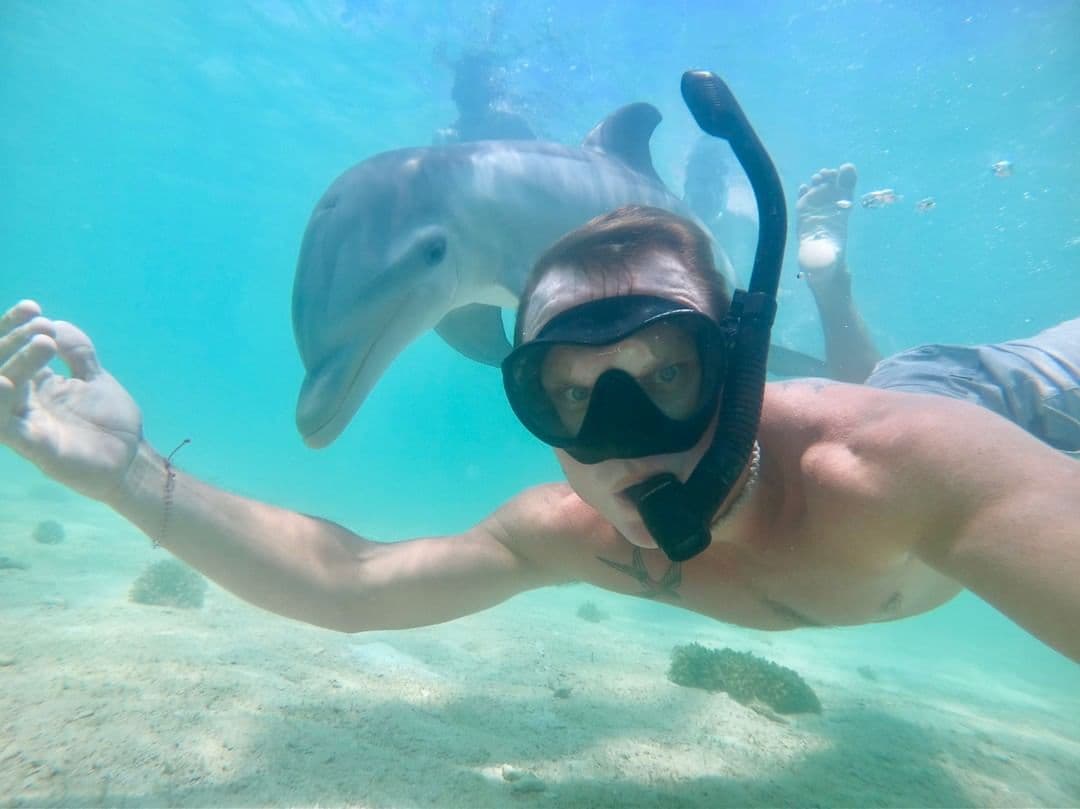
Green and hawksbill turtles and southern stingrays are the regulars, with spotted eagle rays, the odd nurse shark, and parrotfish, angelfish and blue tangs on the reefs. In the shallows of Half Moon Bay, young lemon sharks cruise over the sand.
Some days bring dolphins: wild bottlenose dolphins live in these waters year-round, and one, JoJo, was declared a National Treasure in 1989. Nobody can promise them, which is what makes it special when it happens.
From January to April, humpback whales migrate past the islands, with the best odds from late January to early March; a full day that runs farther out improves your chances, and nobody promises those either.
Season by season
- Winter, December to March: the water cools toward its February low in the high 70s, the wind and the ocean swell run higher, and some days the north-coast reefs are too rough, so the inside reefs and the banks earn their place. Humpbacks peak in February.
- Spring, April and May: the wind eases, and May is one of the calmest months of the year, flat enough for the far reefs. Thimble jellyfish occasionally swarm off the beaches in spring and leave an itchy rash; if you see them, snorkel somewhere else.
- Summer, June to August: warm, often glassy water, with nurse sharks gathering at French Cay in June and July and August usually calm unless a storm is near.
- Fall, September to November: September is the peak of hurricane season, yet its sea is usually calm; October and November are good for anything in the water.
Visibility, and an honest word about the coral
On the outer reefs and the wall, visibility of around 100 feet is normal, and a boat almost always beats the beach for clarity. Close to shore it depends on wind and tide: stirred-up sand after a blow, clearer water on a rising tide. The coral is not what it was. Since 2019 stony coral tissue loss disease, which has swept the Caribbean, has damaged many of the reef-building brain, pillar and star corals here, starting on South Caicos that January and reaching West Caicos by May; treatment and monitoring have run ever since. The sea fans, sponges and fish are what make these reefs feel alive, and they’re still everywhere.
Charters for wildlife
3. First time? Start here
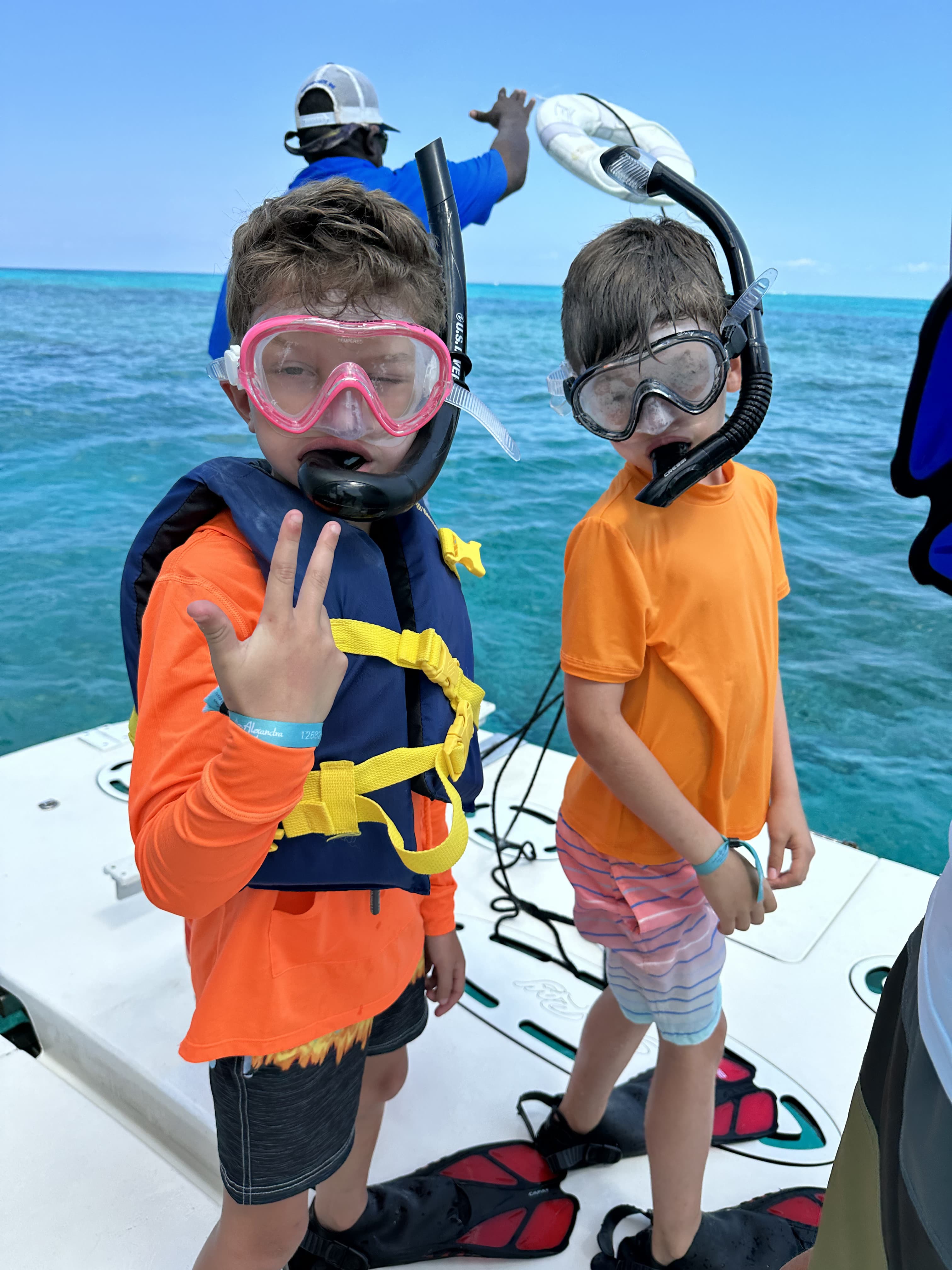
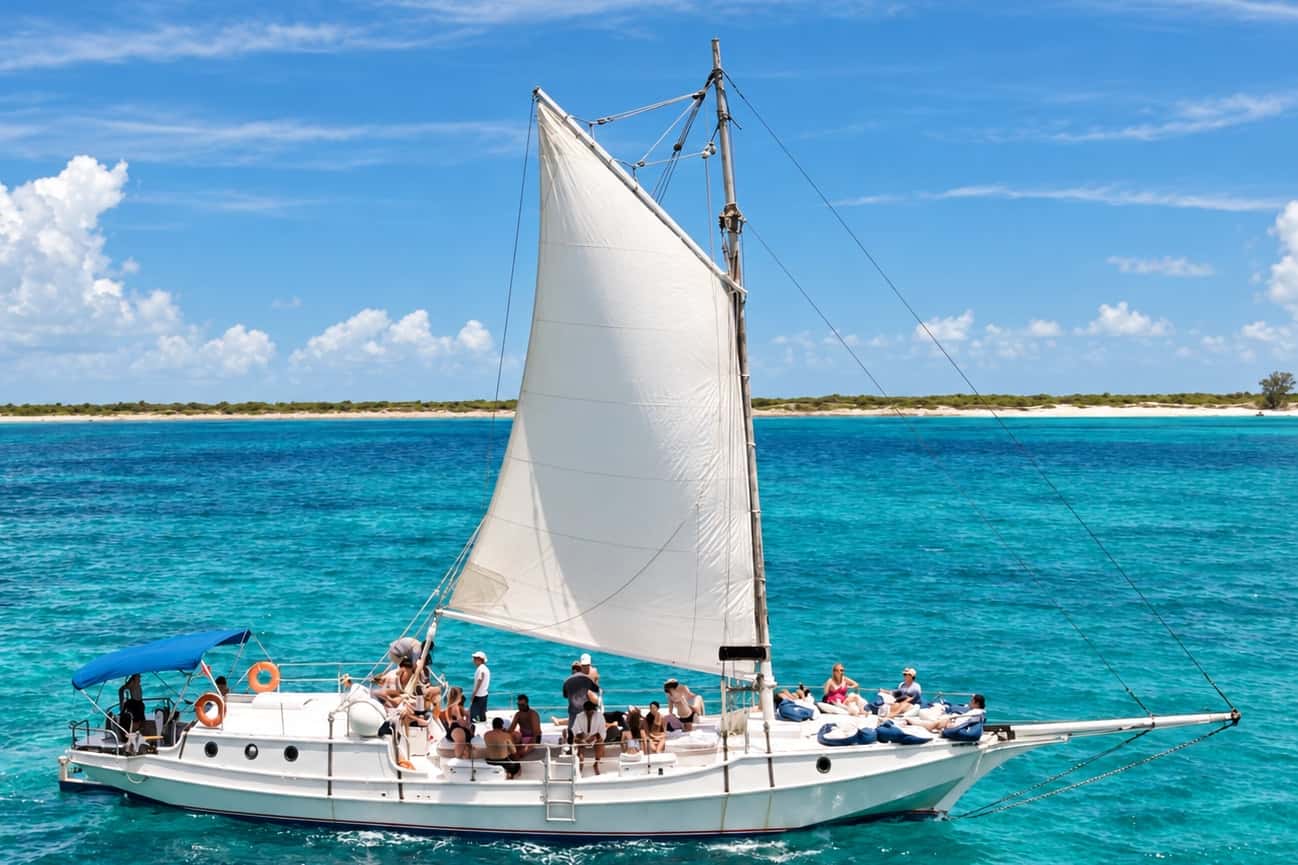
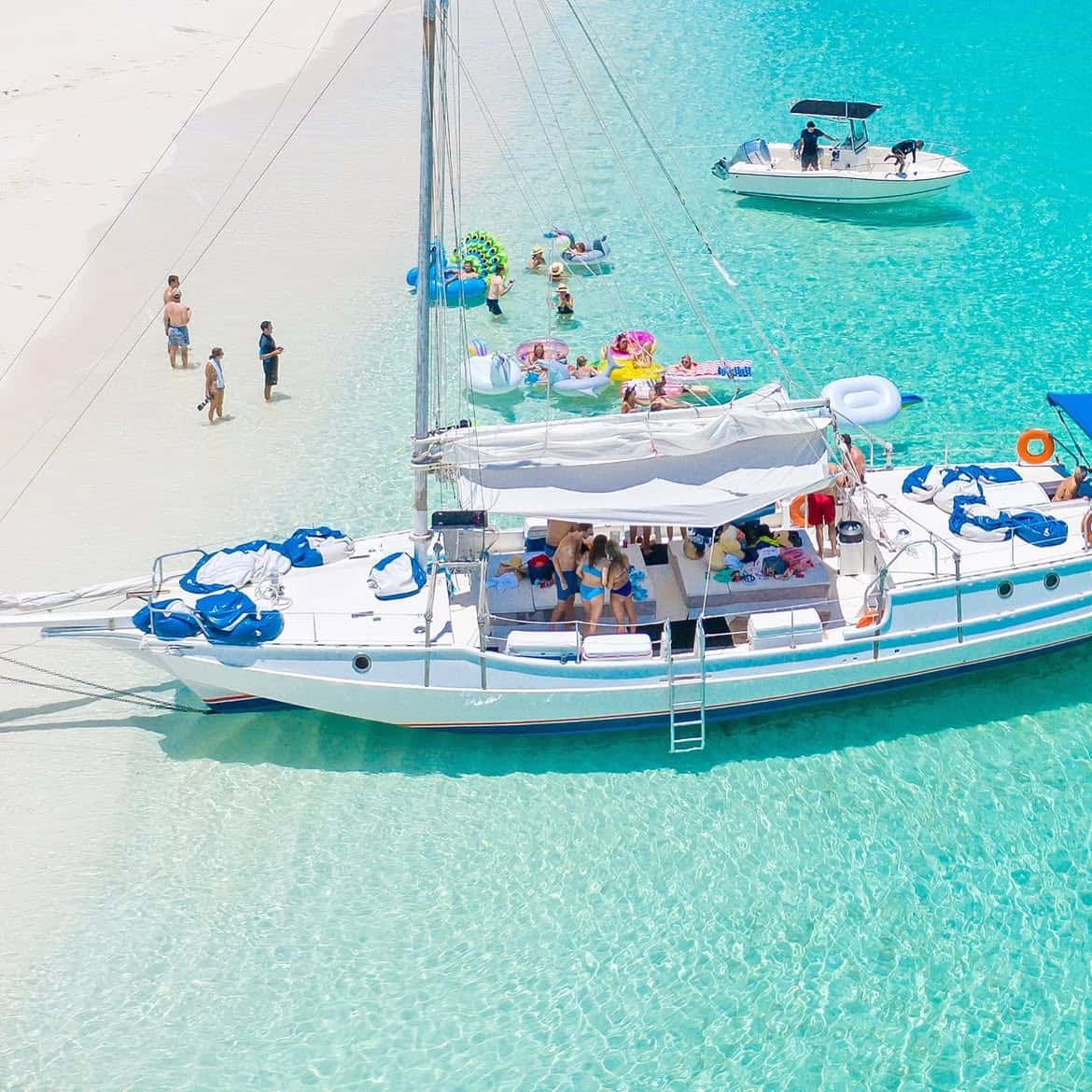
You don’t need to be a strong swimmer, and if anyone in your group can’t swim, tell the captain. Start somewhere calm and shallow, in water you can stand in, and practice breathing through the snorkel with your face in the water before you go anywhere. Wear a snorkel vest or life jacket if you’re unsure, keep your fins below the surface and your hands to yourself, and float rather than stand, since fire coral, sea urchins and the reef itself are all below you. If a current pulls, swim across it or toward shore rather than against it. Snorkeling gear and life jackets come on every charter, and the 70ft schooner also carries flotation belts.
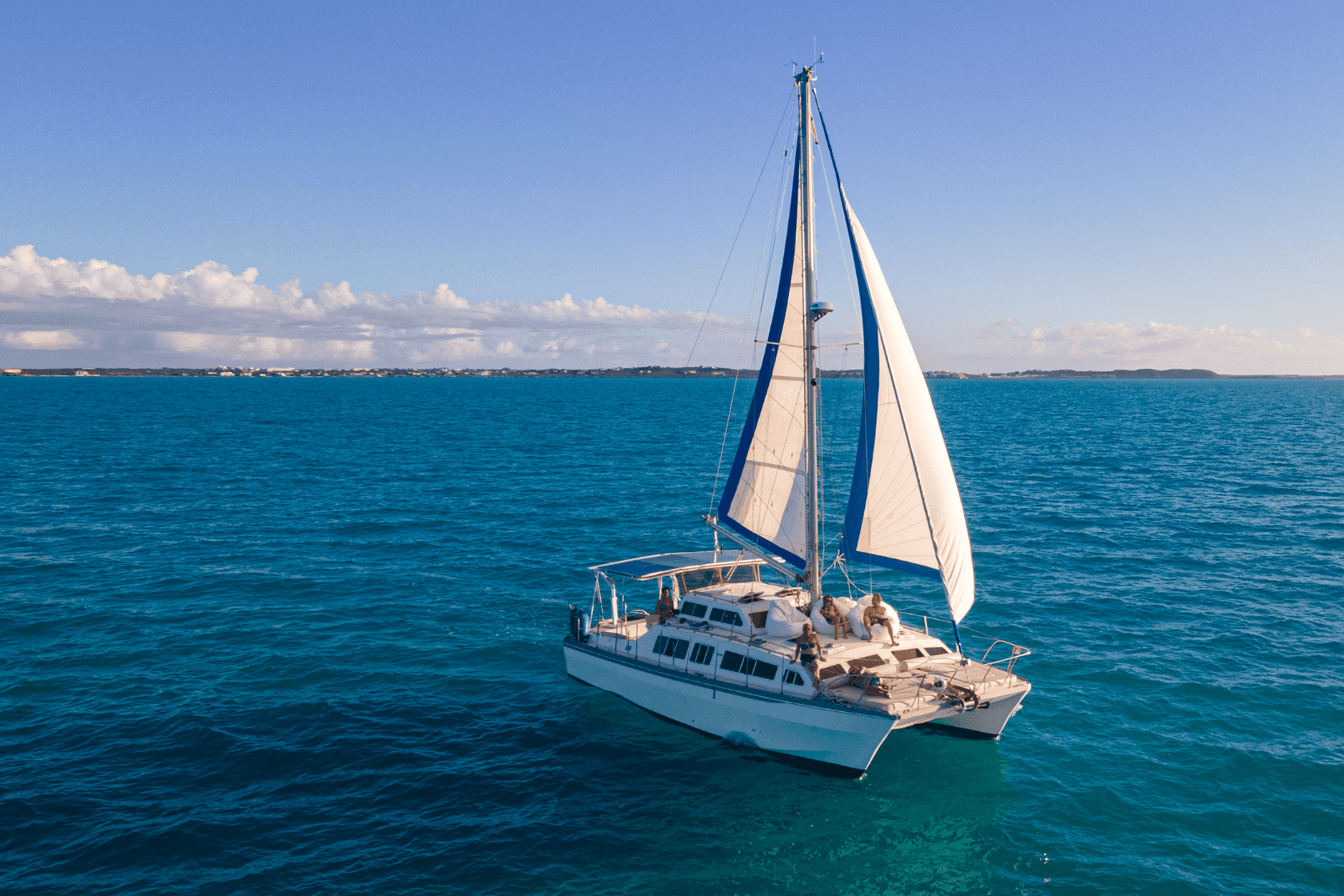
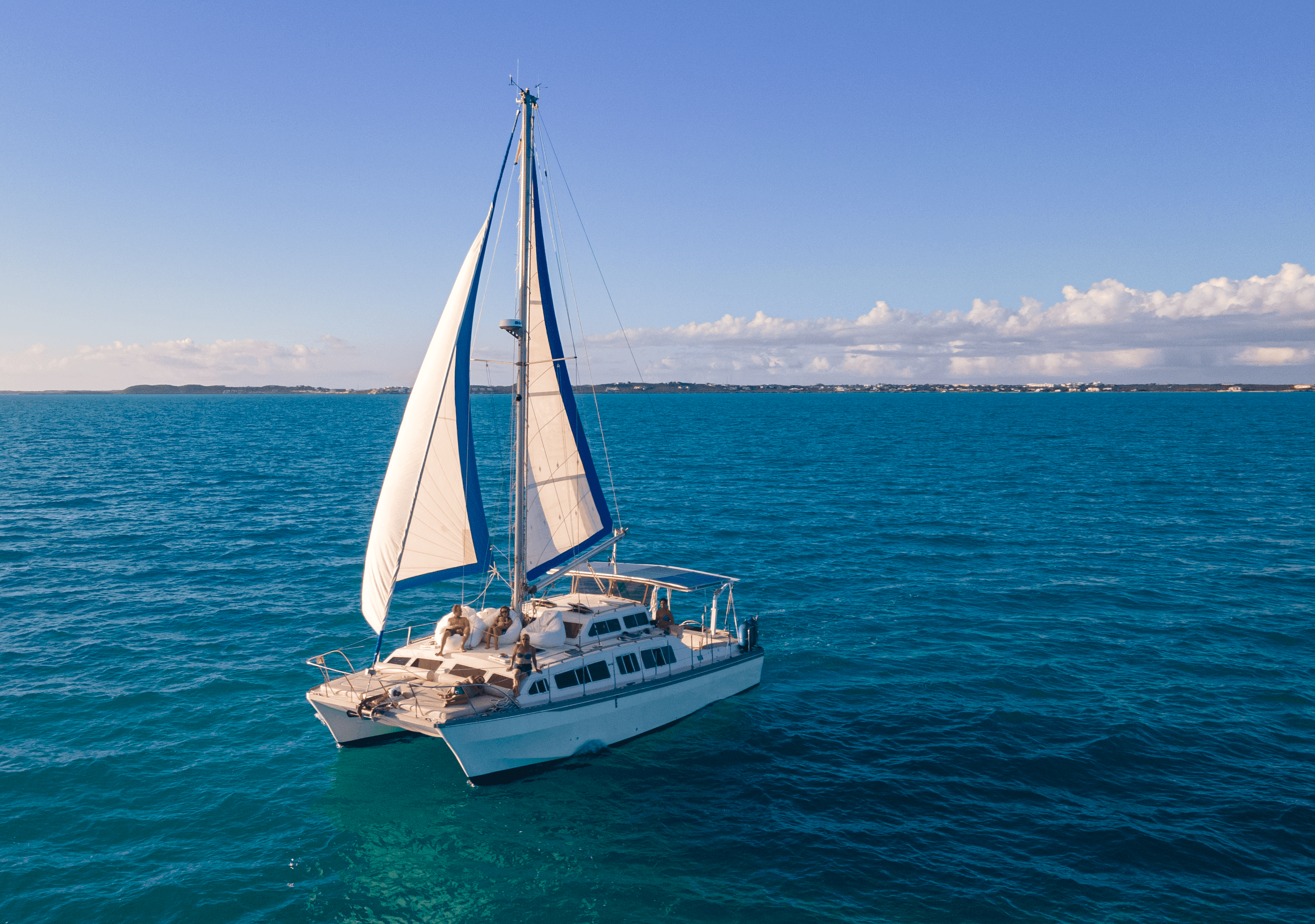
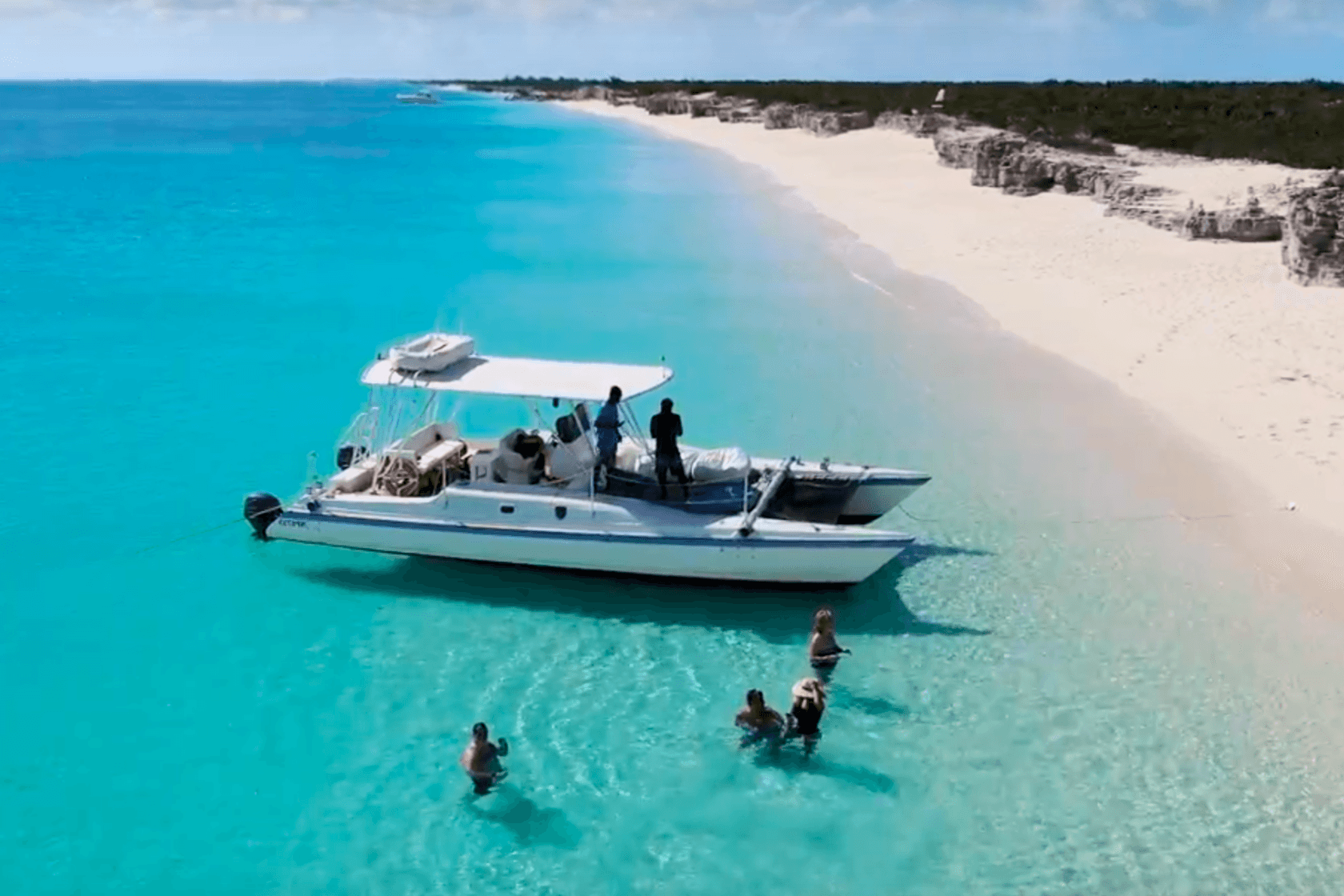
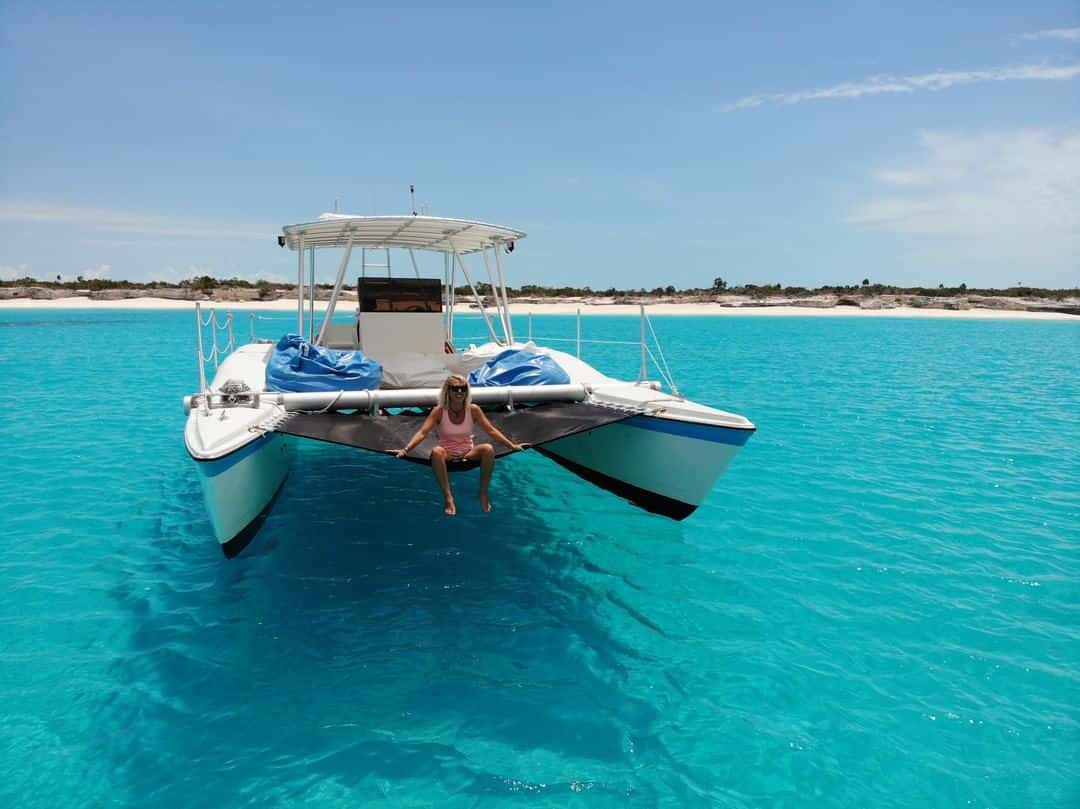
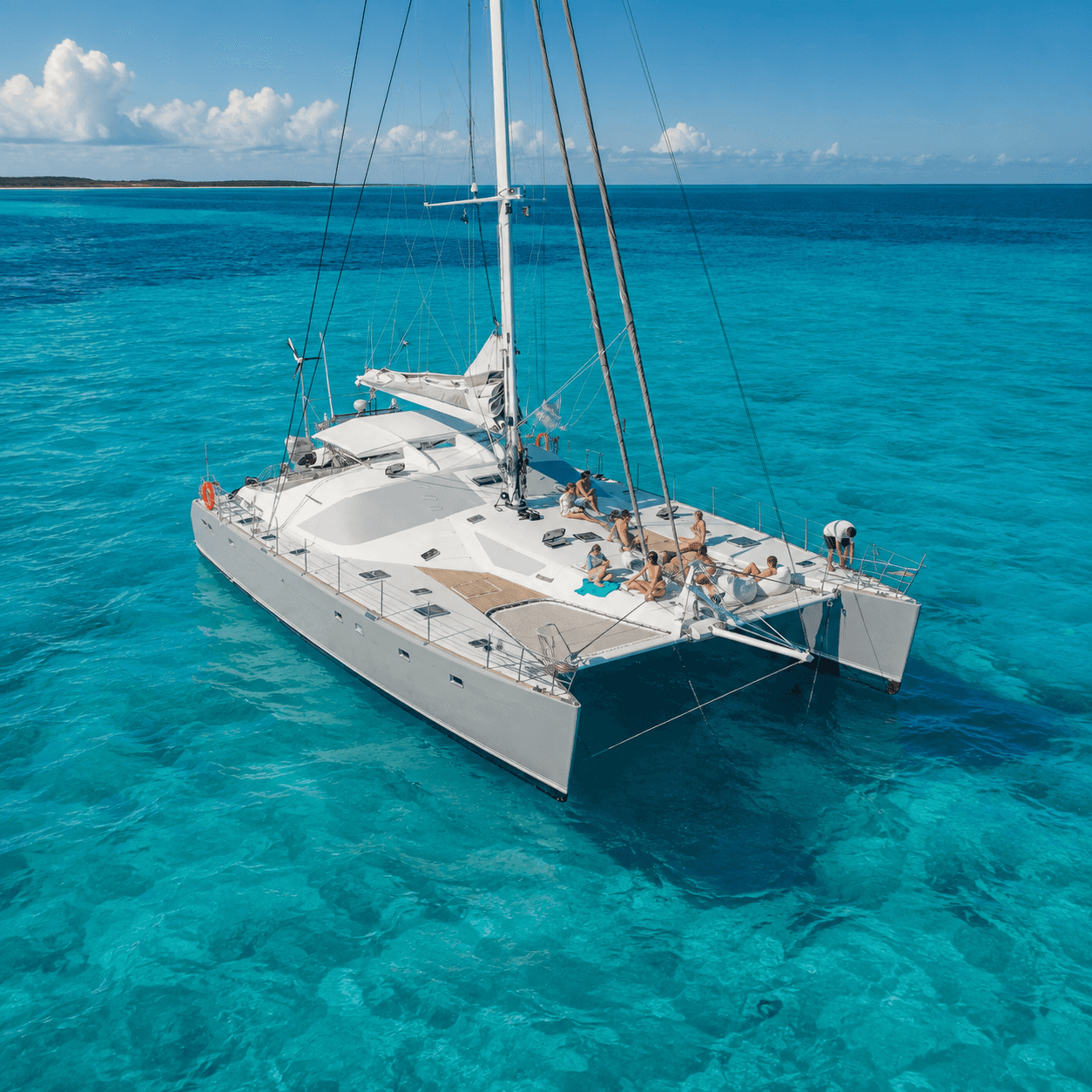
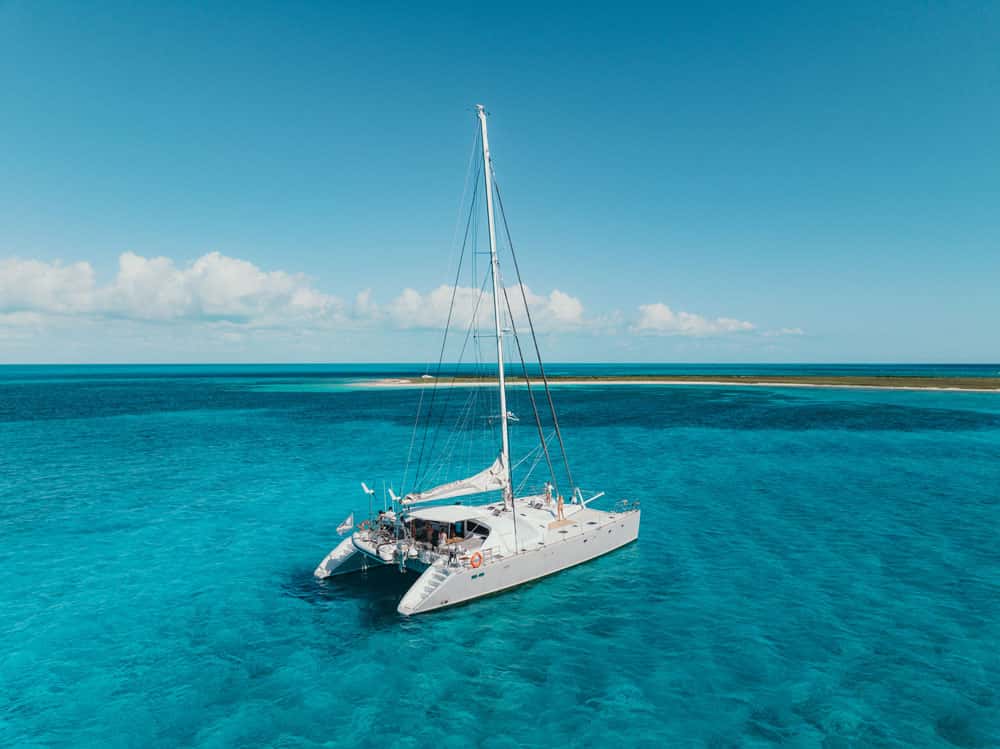
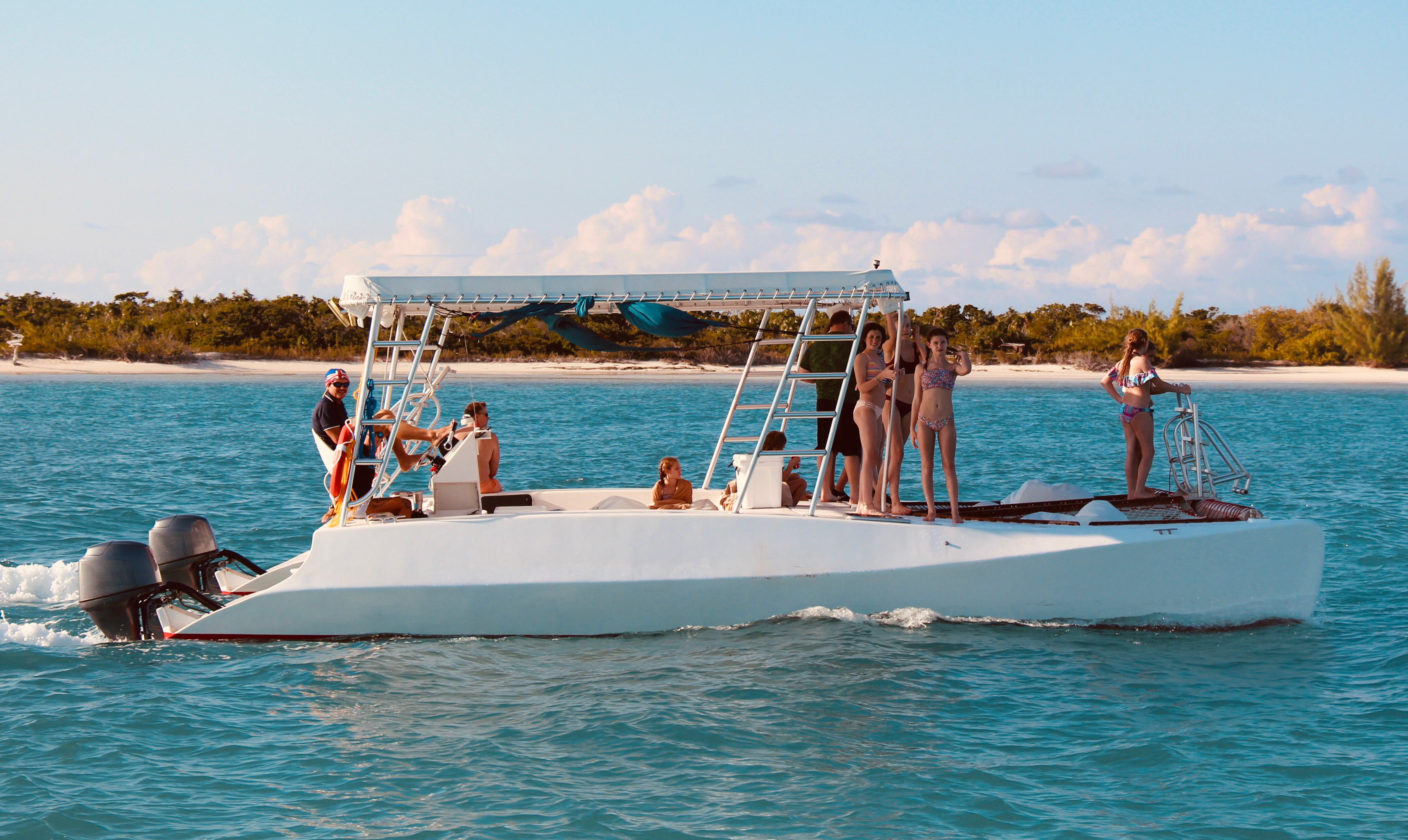
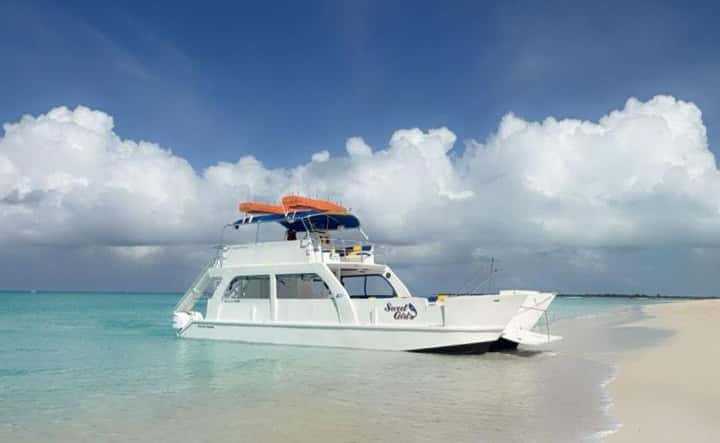
Once you’re comfortable, there’s more to try. The 30ft, 35ft and 41ft catamarans carry a Subwing, a board you hold as the boat tows you under the surface, best for confident swimmers; the 40ft Ultra Luxury Yacht brings underwater scooters, and the 51ft power catamaran carries a kayak and paddleboards for anyone who’d rather float over the reef than in it.
Good to know
Don’t touch or stand on the coral, don’t feed or chase the fish, and take nothing: in the national parks, removing shells, coral or sea life, or taking conch or lobster, is against the law. The reefs do better without chemical sunscreen filters: use a mineral sunscreen (zinc oxide or titanium dioxide), go light on it, or wear a rash guard. Leave lionfish alone; their spines are venomous.
What to bring
- Reef-safe sunscreen, put on before you leave the dock so it soaks in, or a rash guard, which also takes the edge off a February swim; the 43ft allows no aerosol sunscreens.
- Your own mask if you have one that fits, your own towel (none are provided), a hat for the ride and a dry bag for your phone. A drop of baby shampoo rubbed inside the lens and rinsed keeps it from fogging.
- Nothing in glass on the 65ft or the 70ft schooner, and no fins on the coral anywhere.
Snorkeling charters for every level
What a snorkeling charter costs
All-in for the boat, about four hours.
| Boat | Duration | Guests | All-in price | Cancellation |
|---|---|---|---|---|
| 30ft Catamaran Charter | Half Day | up to 13 guests | $1,4842 guests included | Free cancellation up to 72 hours before |
| 35ft Catamaran Charter | Half Day | up to 10 guests | $1,4842 guests included | Free cancellation up to 72 hours before |
| 41ft Sailing Catamaran Charter | 5 Hours | up to 12 guests | $2,4554 guests included | Free cancellation up to 72 hours before |
| 70ft Sailboat Charter | 4 Hours | up to 50 guests | $2,74012 guests included | Free cancellation up to 48 hours before |
| 26ft Regal Charter | 4 Hours | up to 10 guests | $1,8276 guests included | Free cancellation up to 48 hours before |
| 35ft Luxury Yacht Charter | 4 Hours | up to 12 guests | $3,0266 guests included | Free cancellation up to 24 hours before |
- Half-Day Private Charter
- Guests
- up to 13 guests
- All-in price
- $1,4842 guests included
- Cancellation
- Free cancellation up to 72 hours before
- Half-Day Private Charter
- Guests
- up to 10 guests
- All-in price
- $1,4842 guests included
- Cancellation
- Free cancellation up to 72 hours before
- 5-Hour Private Charter
- Guests
- up to 12 guests
- All-in price
- $2,4554 guests included
- Cancellation
- Free cancellation up to 72 hours before
- 4-Hour Private Charter
- Guests
- up to 50 guests
- All-in price
- $2,74012 guests included
- Cancellation
- Free cancellation up to 48 hours before
- 4-Hour Private Charter
- Guests
- up to 10 guests
- All-in price
- $1,8276 guests included
- Cancellation
- Free cancellation up to 48 hours before
- 4-Hour Private Charter
- Guests
- up to 12 guests
- All-in price
- $3,0266 guests included
- Cancellation
- Free cancellation up to 24 hours before
All-in prices include taxes and fees, in the listing's currency, as of Nov 4, 2026.
Private or group?
If it’s one or two of you, the three-hour group tours snorkel the reef too, and add the shipwreck and Iguana Island: see group snorkel tours. For a family or a group, a private boat lets you snorkel as long as you like, with nobody else in the water.
Which of our boats go where
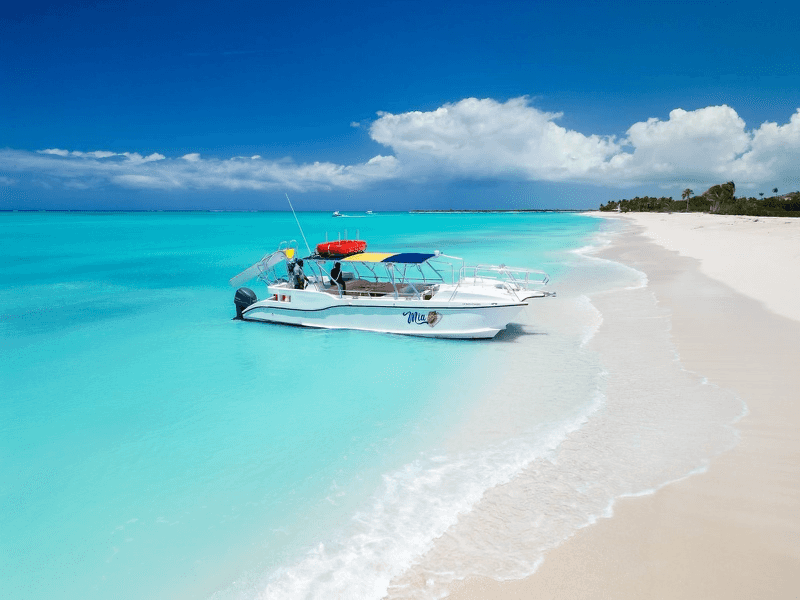
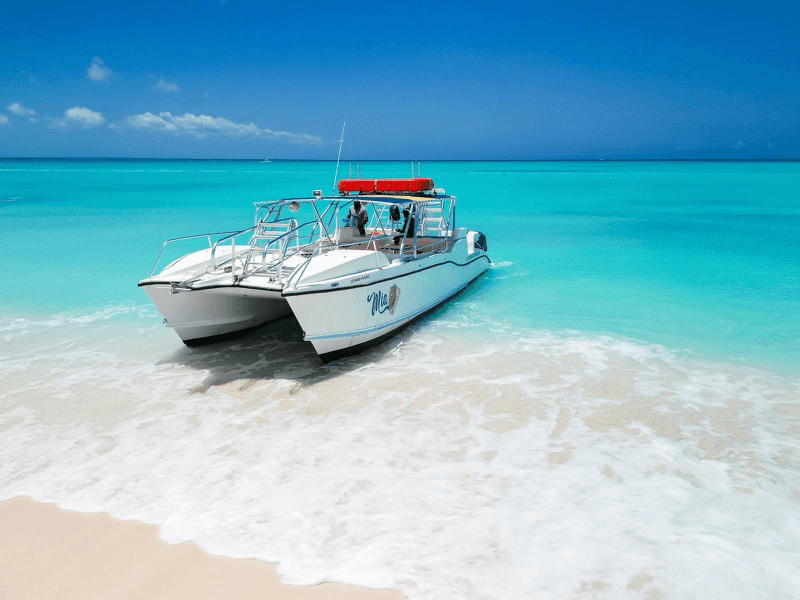
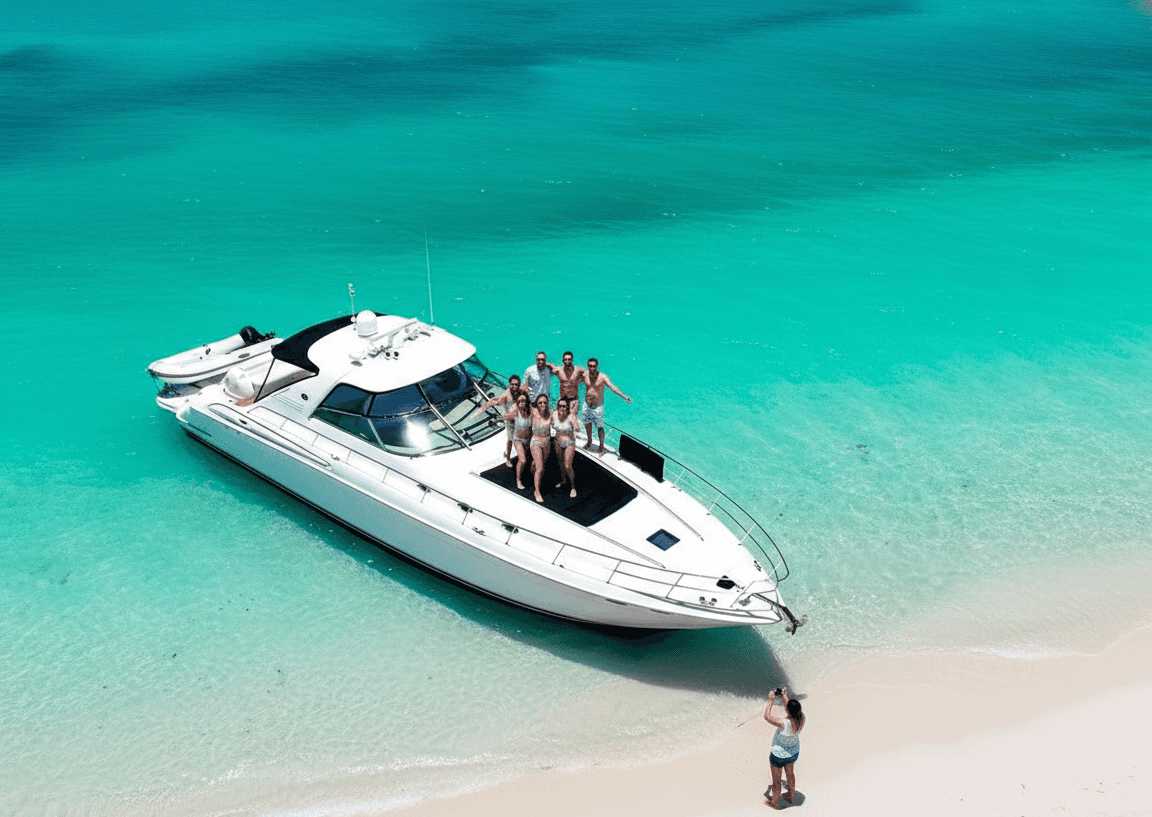
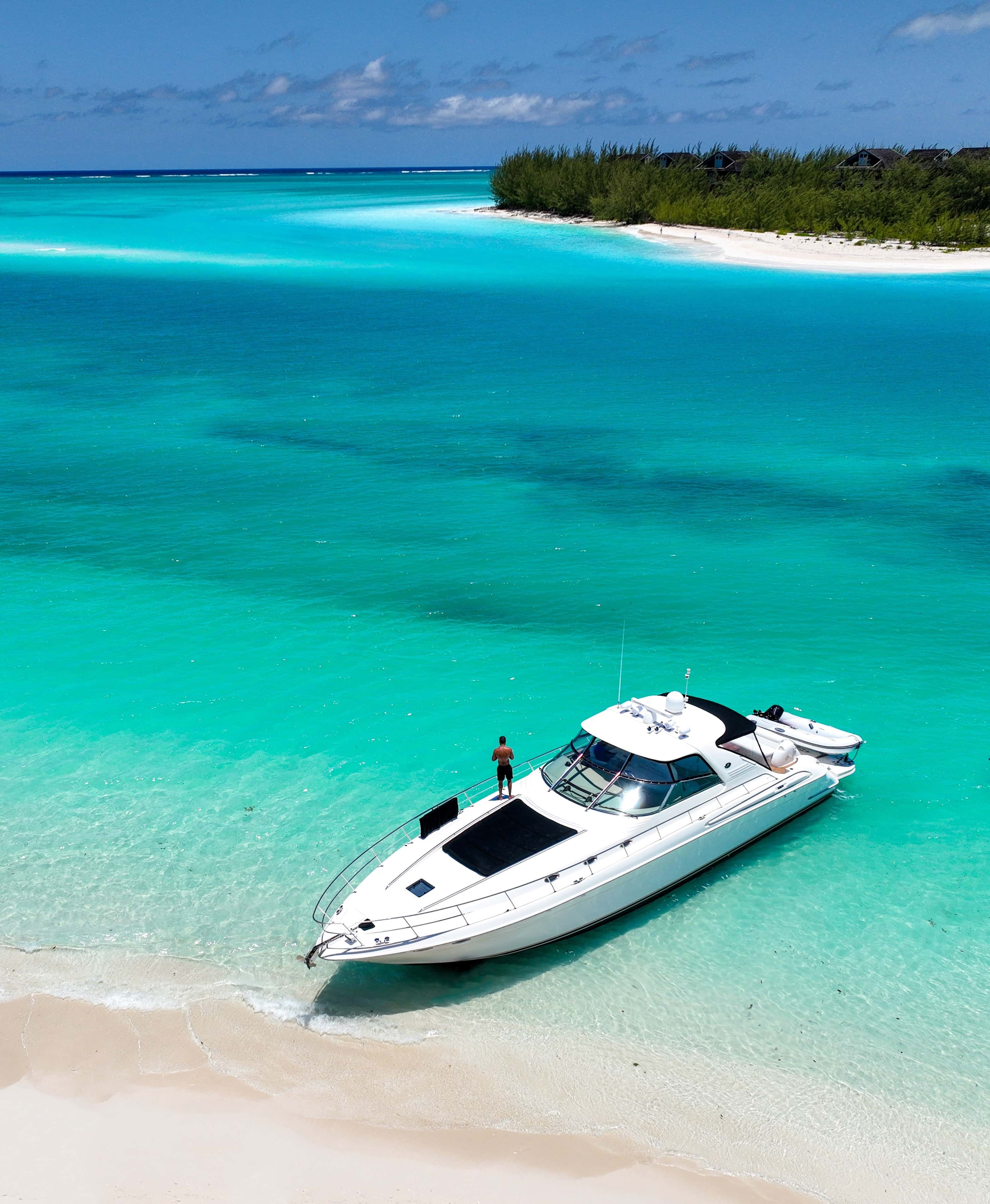
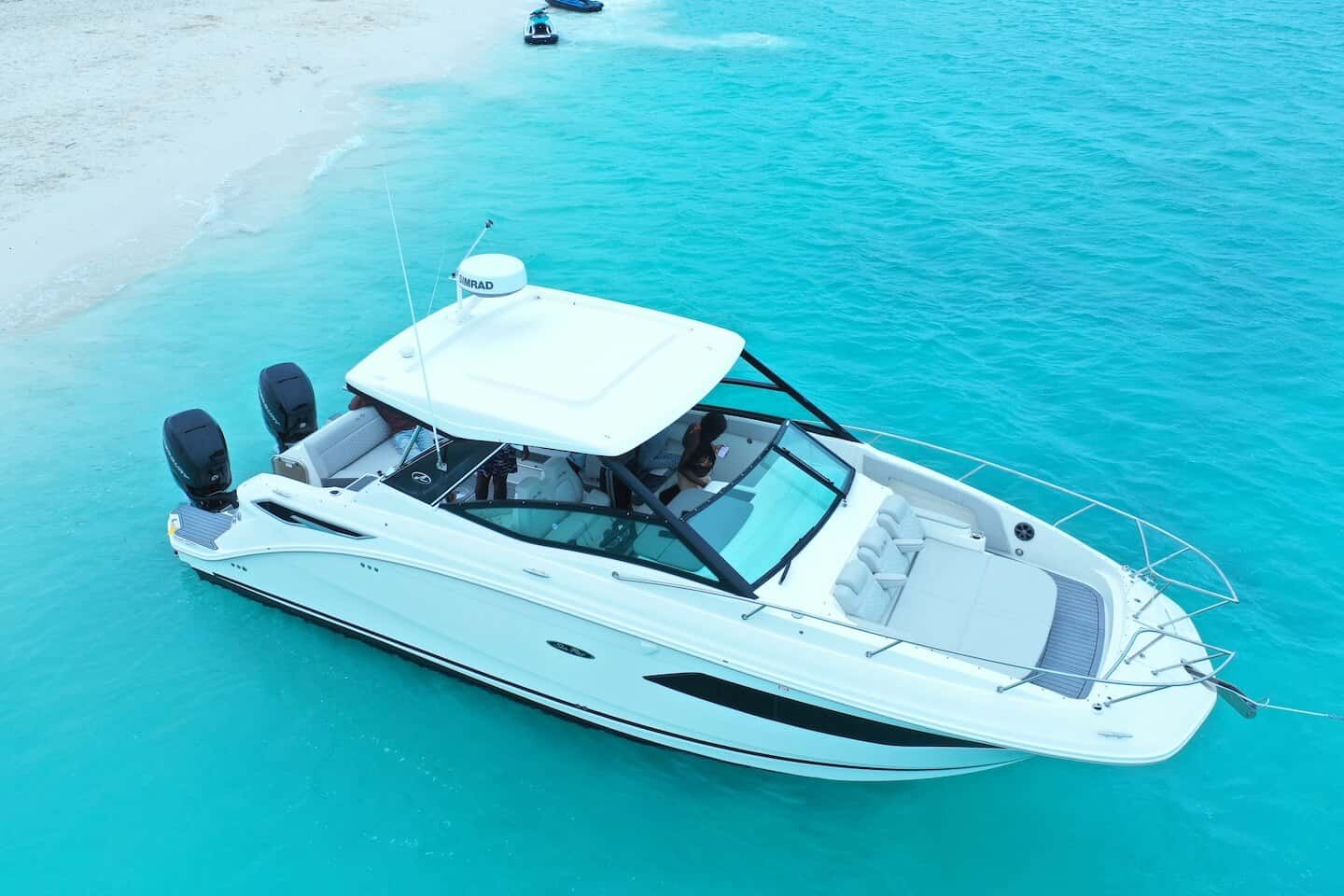
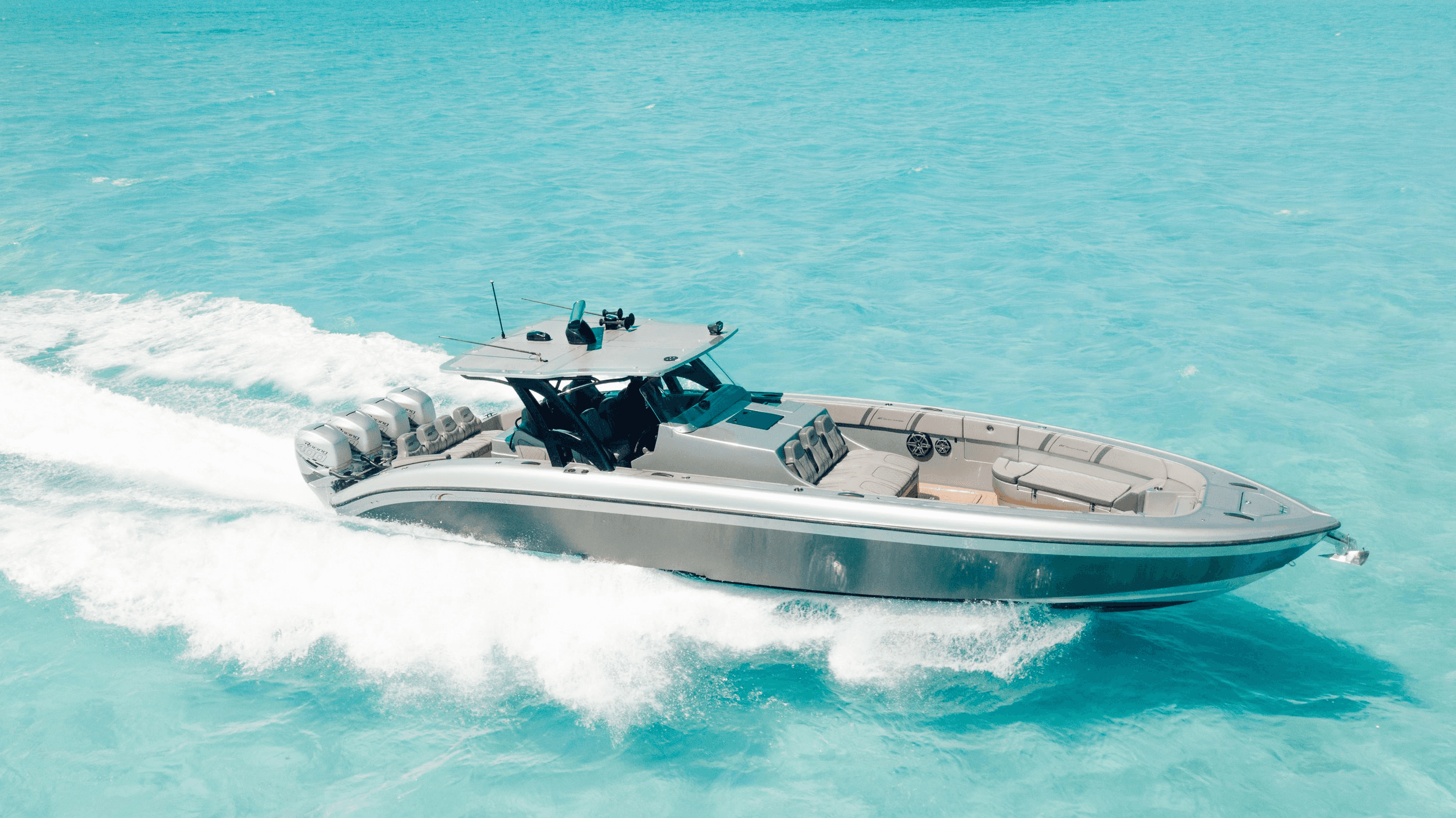
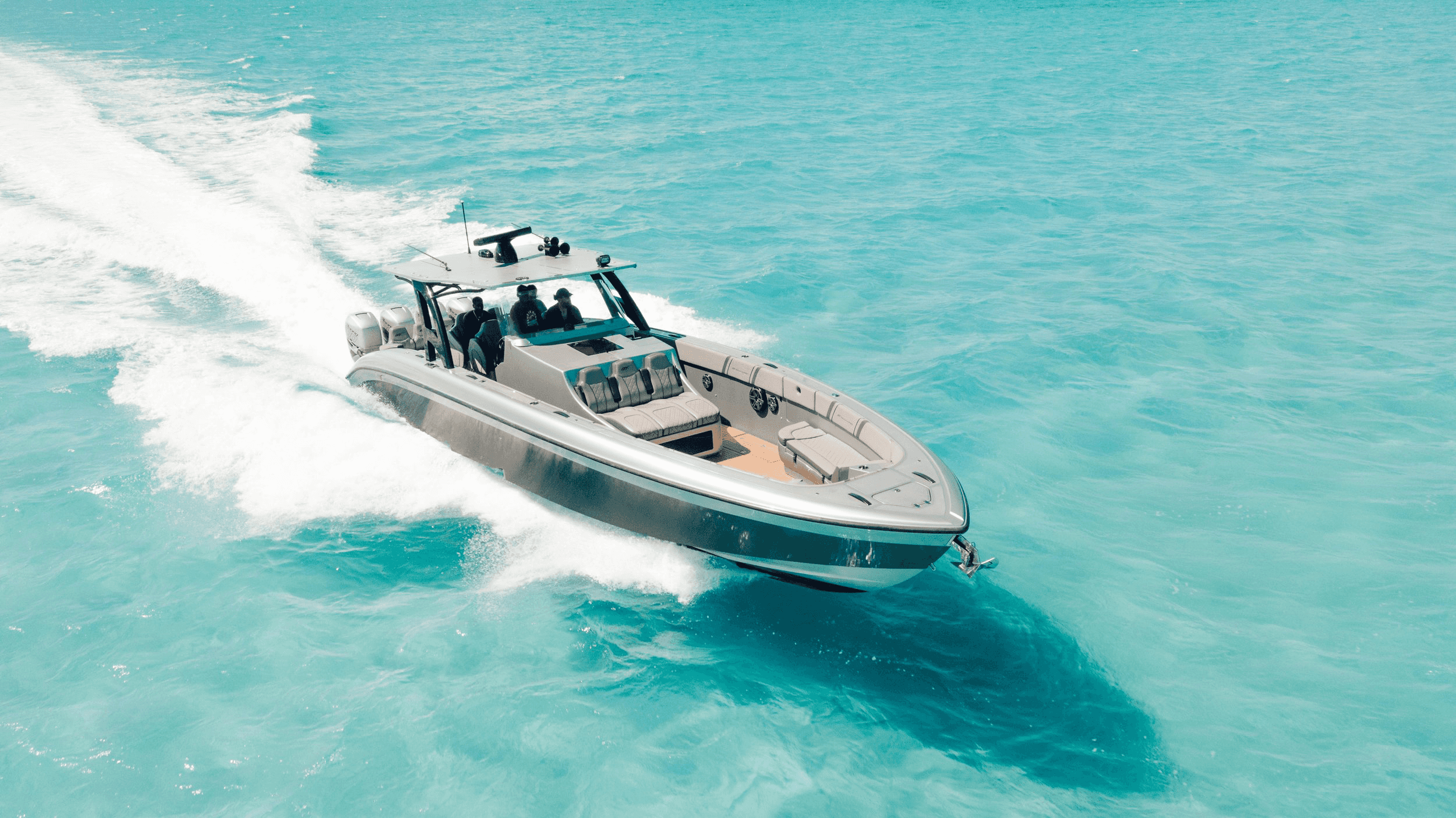
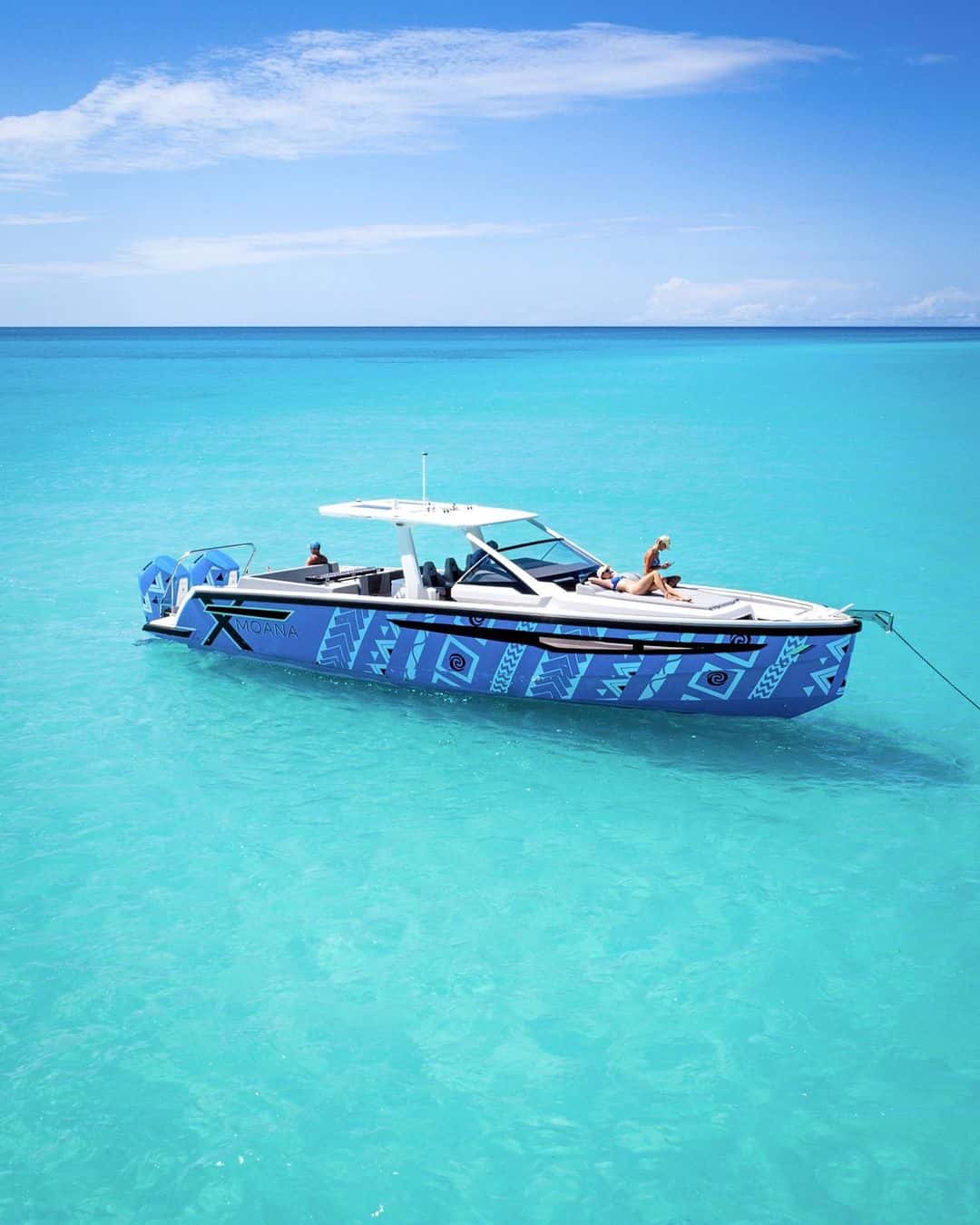
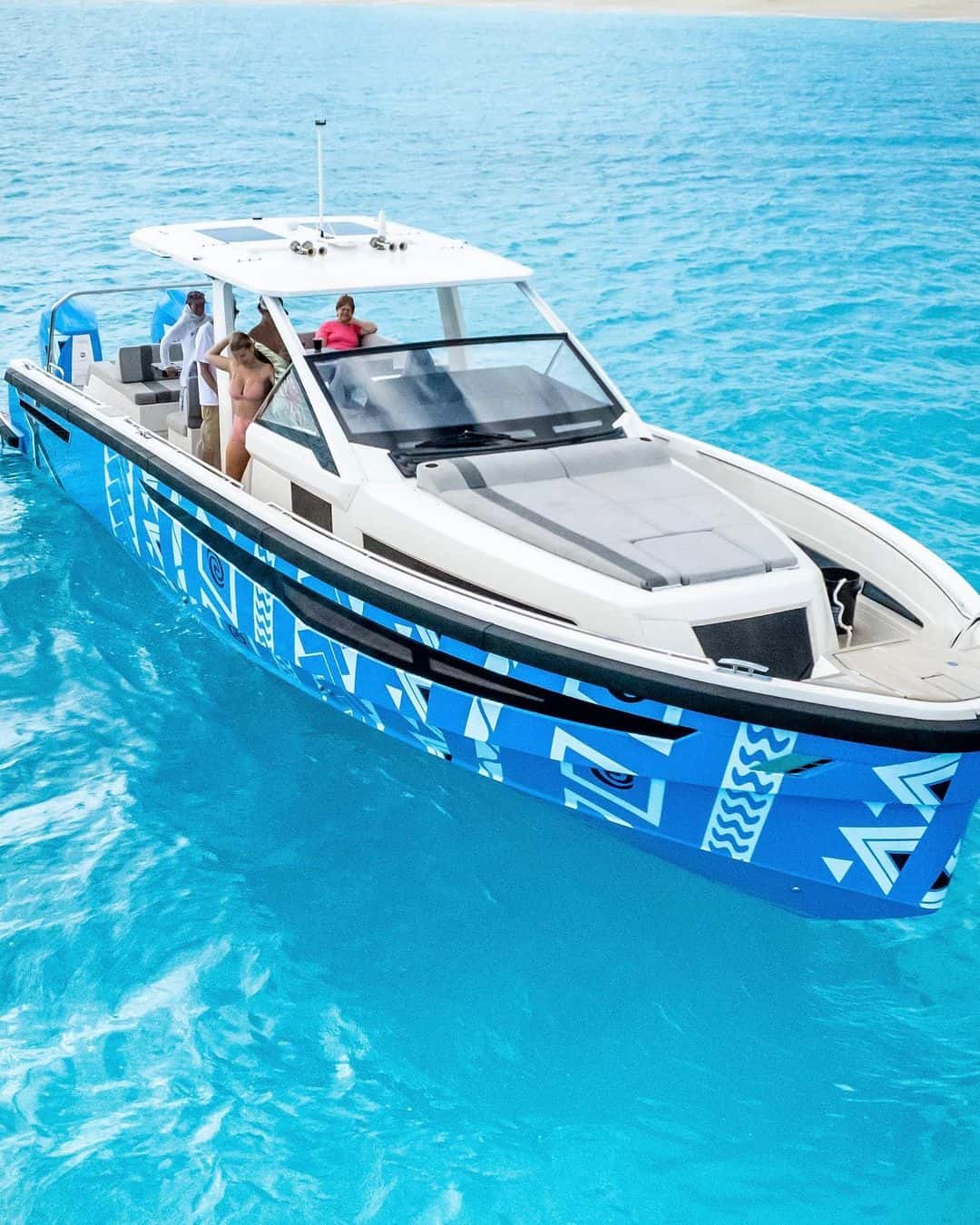
Every private charter we list carries snorkeling gear, and a half day is plenty for the inside reefs and the barrier reef around Leeward Cut. The 35ft Catamaran leaves from a private dock in Leeward Settlement, and its day snorkels the reefs off Leeward, Grace Bay or Pine Cay; the 70ft schooner heads for the barrier reef along the north coast; and the boats that meet at Turtle Cove, such as the 35ft Luxury Yacht and the 44’ Luxury Catamaran Yacht, start right beside Smith’s Reef. For West Caicos, Northwest Point or French Cay, book seven or eight hours and ask us before you book: the captain makes the final call on the morning, from the wind and the swell.
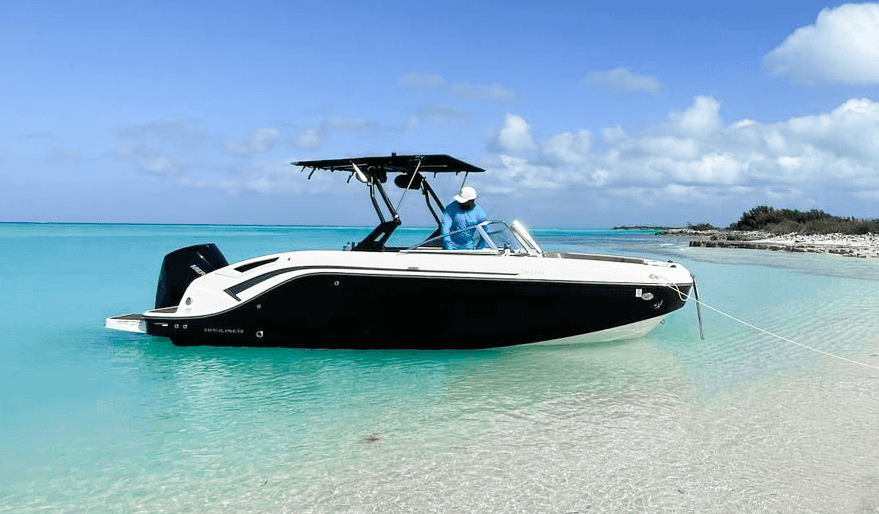
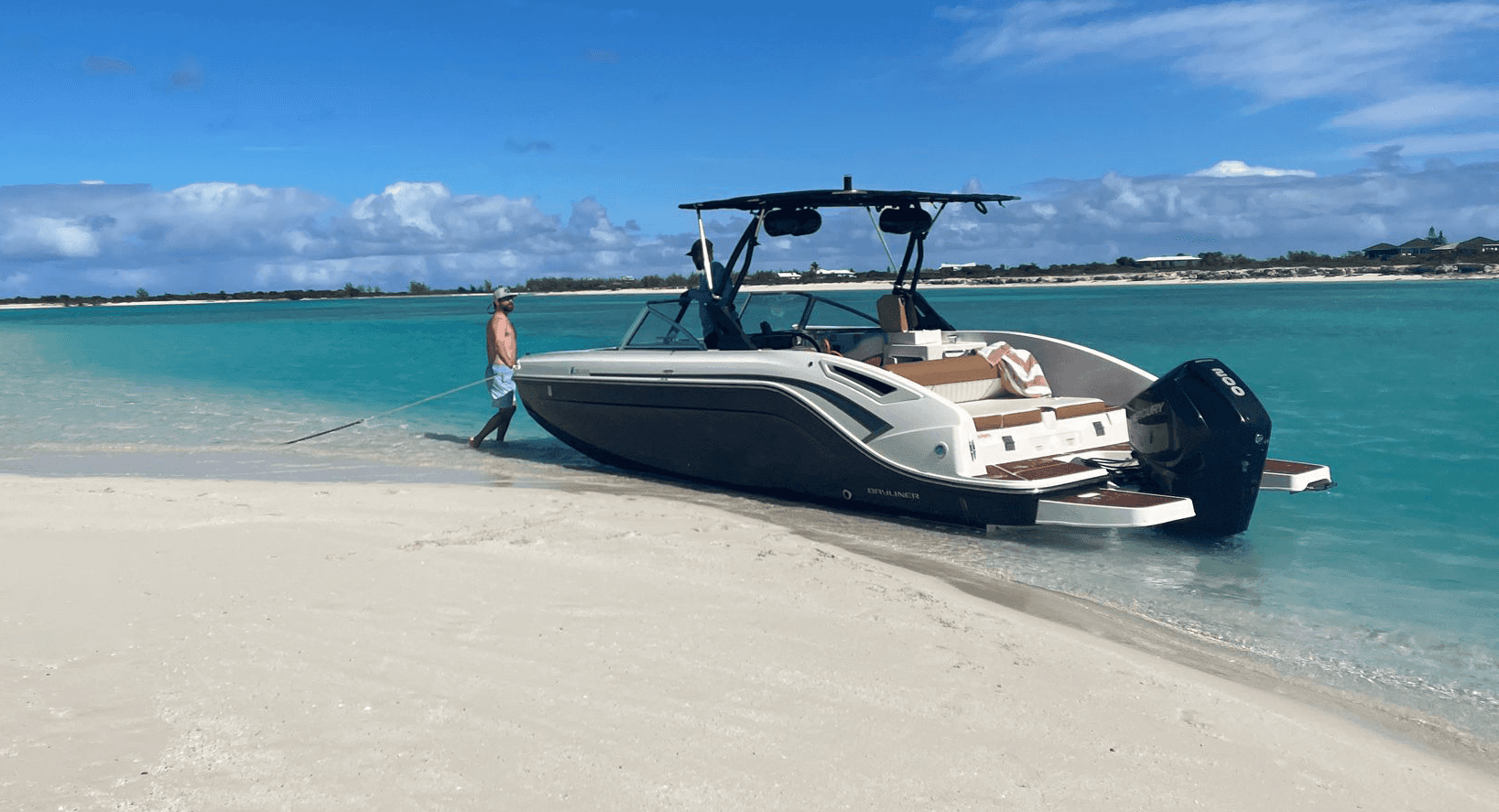
For four snorkelers, the 35ft Catamaran’s four-hour half day is $1,712 all-in ($1,484 for two, then $114 for each extra adult), with snorkeling gear, life jackets, a Subwing, bow netting and an onboard bathroom; the 30ft Catamaran is the same price without the bathroom. For six, the 26ft’s four hours are $1,827 with gear and a free shuttle. For a big group that wants to sail to the barrier reef, the 70ft schooner’s four hours are $2,740 for up to 12, with room for 50 at $137 for each extra adult, masks, fins and flotation belts included. For the far reefs, the 41ft sailing catamaran’s seven hours are $3,882 for four, plus $131 for each extra adult up to 12. Prices include taxes, a deposit secures the boat, each listing shows its free cancellation window (24 to 72 hours before), and a request is confirmed within a few hours.
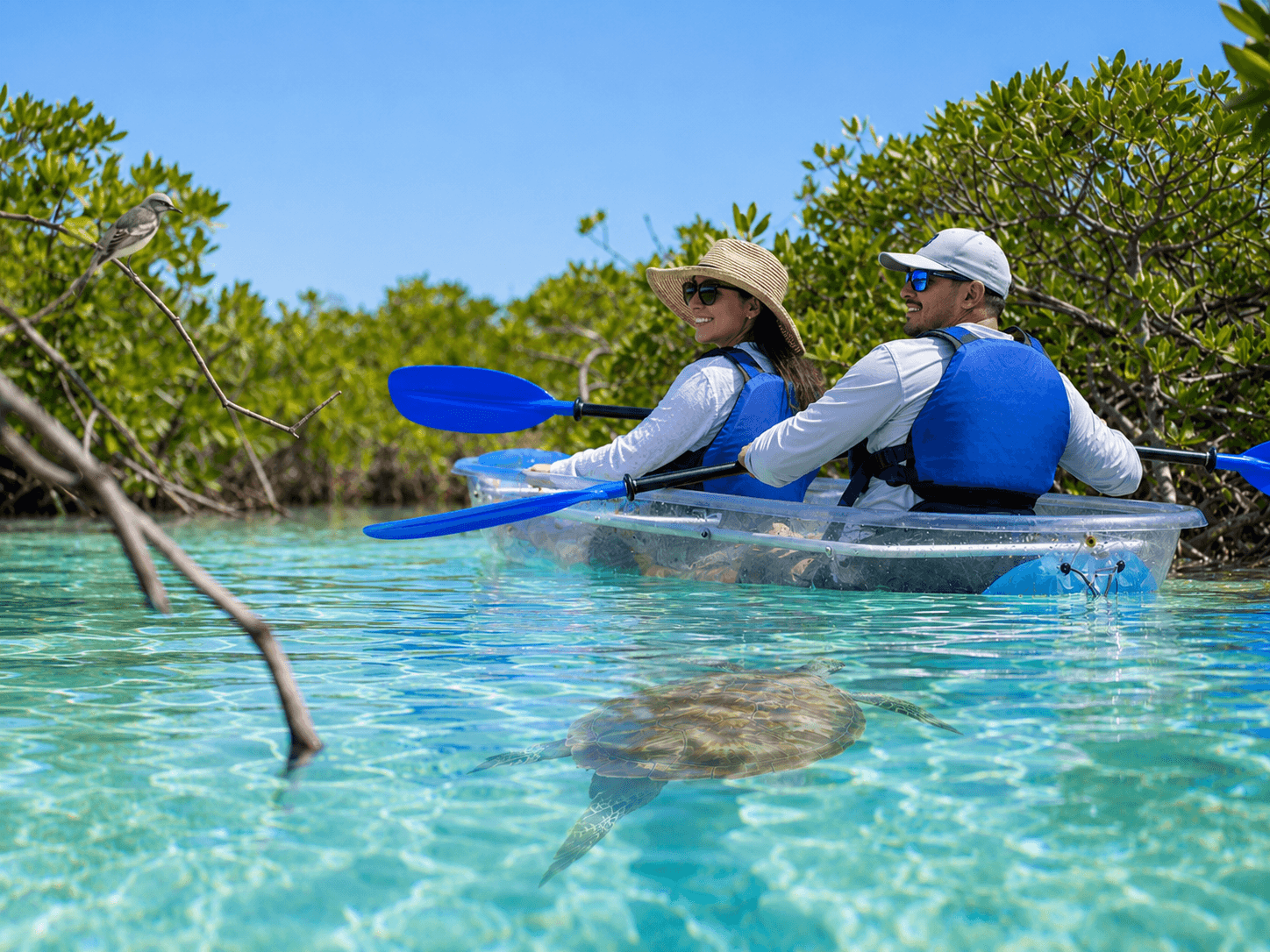
Every boat on TCI Experiences is handpicked and verified for safety, service and upkeep. For the clearest look at the mangroves, try a clear kayak tour.