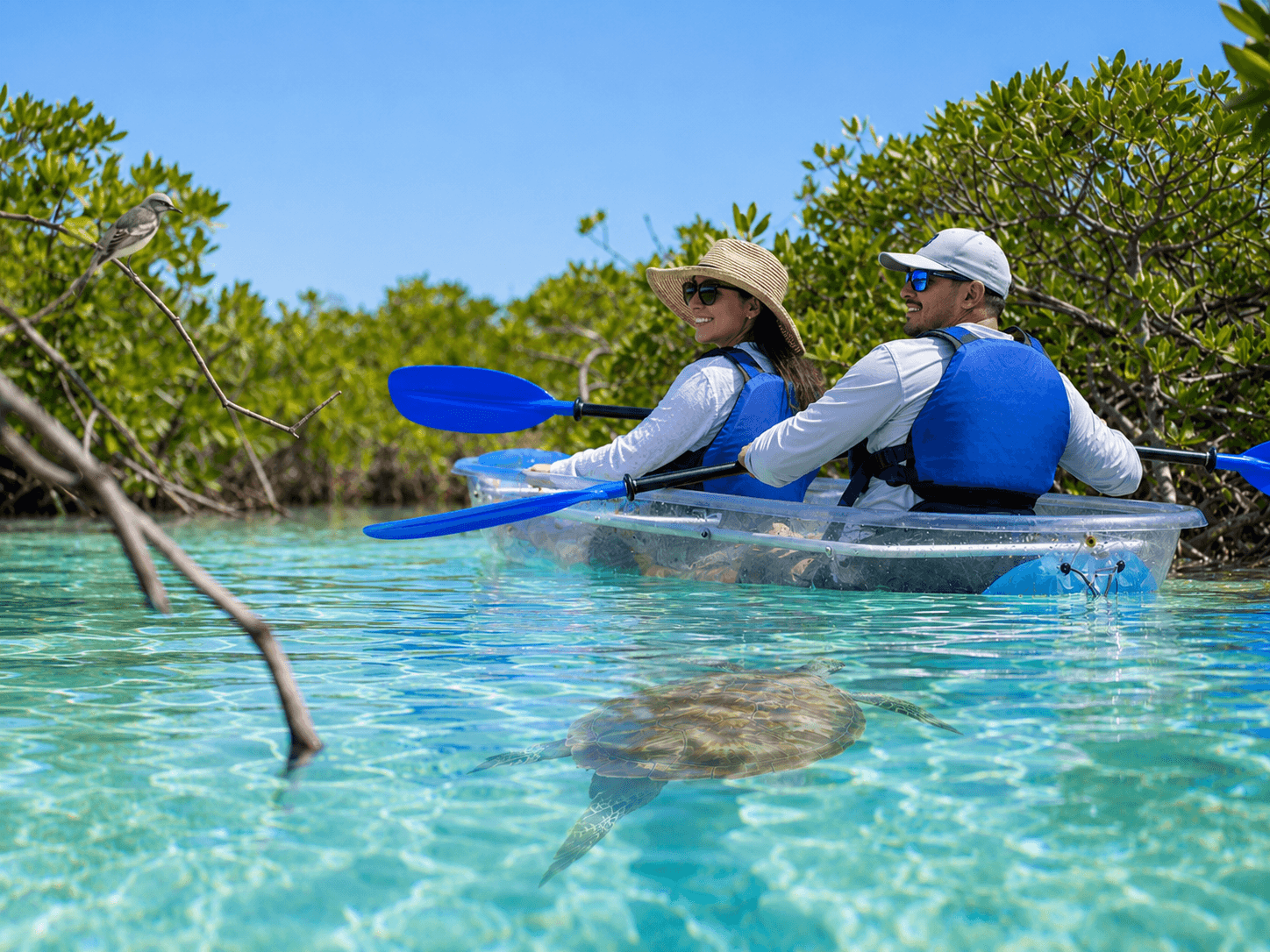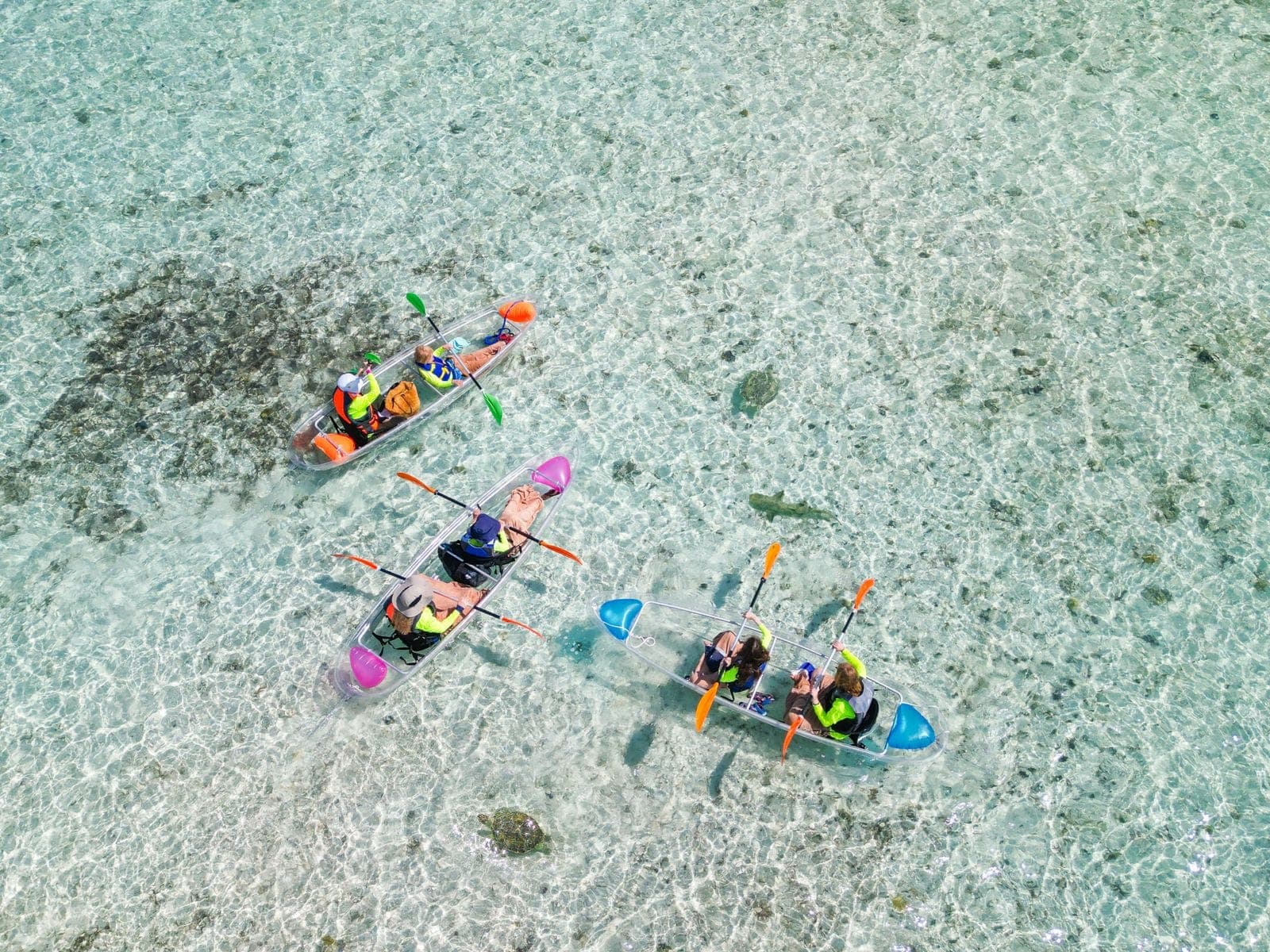
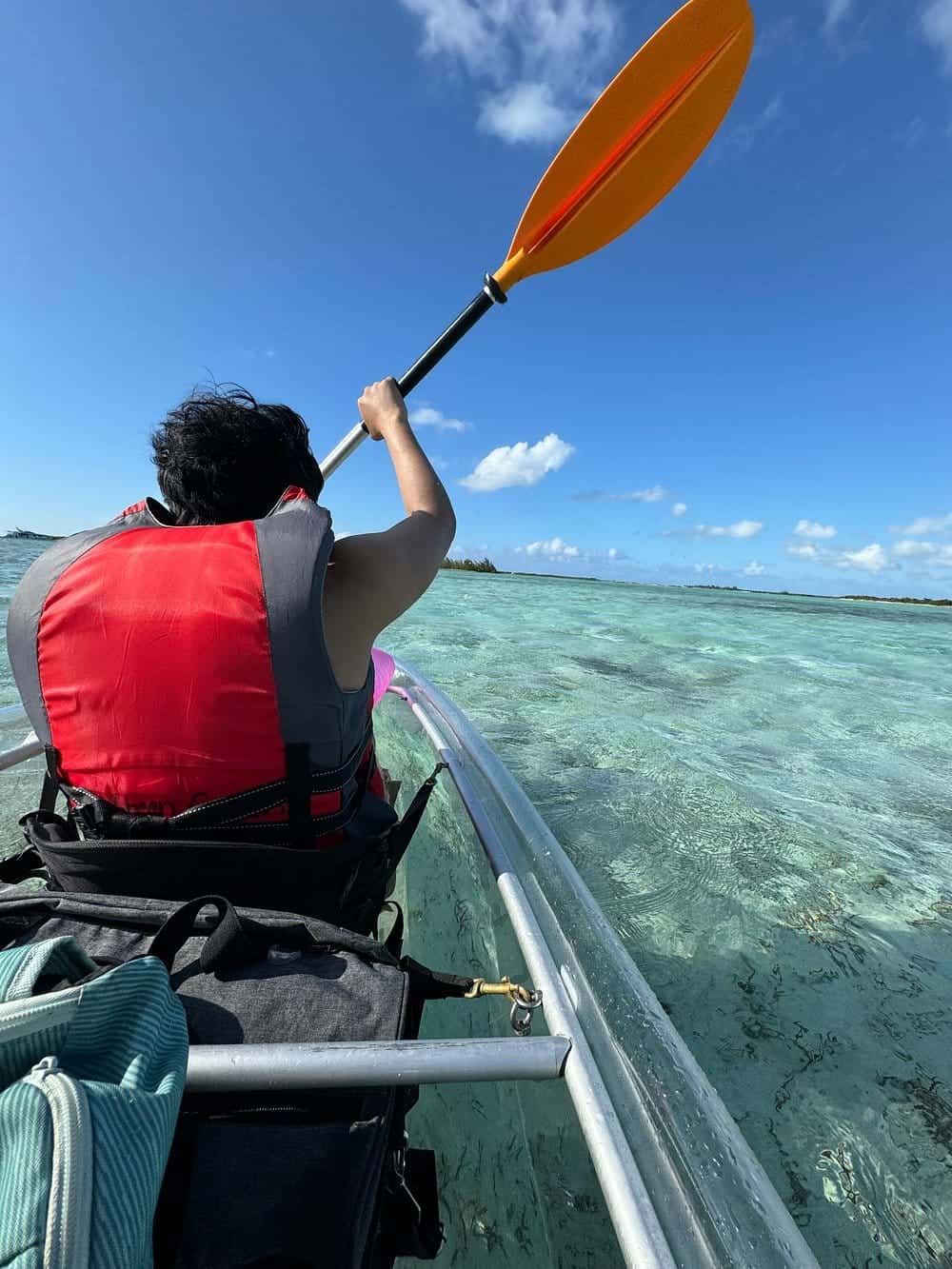
The mangroves are where the sea life of Turks and Caicos grows up: shallow, sheltered channels where juvenile turtles, stingrays and lemon sharks feed out of reach of anything bigger. From an ordinary kayak you’d see a few shadows. In a clear-bottom one, all of it passes a few inches under your knees, which is the entire point of the tour.
The reserve, and its rules
Everything these tours paddle past sits in the Princess Alexandra Nature Reserve, the cluster of small cays off the east end of Providenciales: Mangrove Cay, Little Water Cay, Donna Cay and a few smaller ones. A nature reserve carries stronger protection than the national park around it. Fishing, taking conch or lobster, collecting anything natural and disturbing wildlife are all against the law, jet skis are banned outright, and Little Water Cay, home of the rock iguanas, is run by the National Trust with a ticketed boardwalk. Mangrove Cay alone covers 286 acres, much of it a red-mangrove estuary, and it sits directly across the channel from Leeward.
What lives in the mangroves
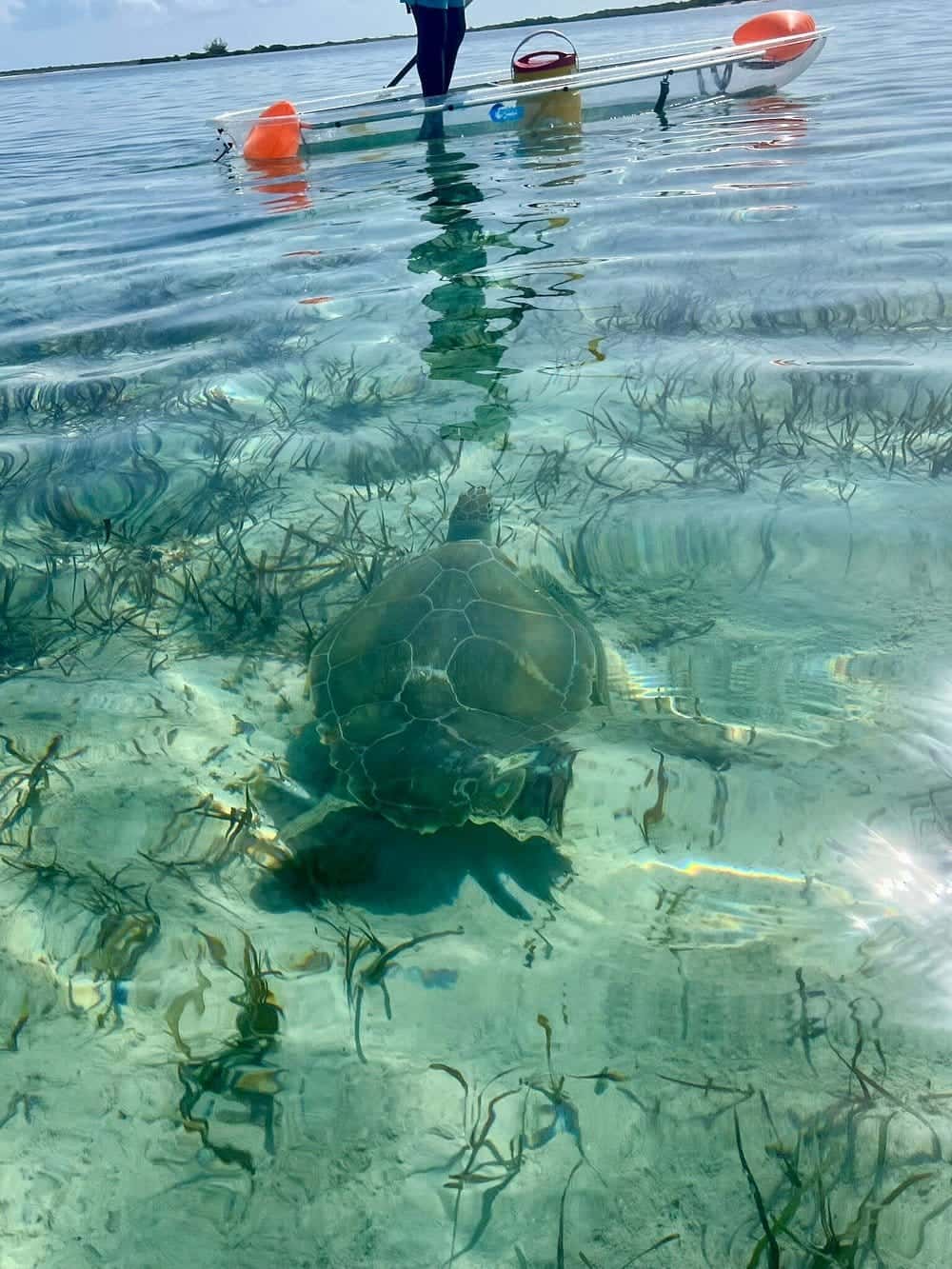
Red mangroves stand on arching prop roots, and the shade and tangle beneath them is a nursery: tiny fish hide between the roots, and bigger animals come in to feed. In Mangrove Cay’s main creek it’s normal to count 20 to 50 green turtles, and if you stop splashing and talking they’ll often surface within a few feet of the hull. Juvenile lemon sharks and nurse sharks patrol the channels; at low tide the sandbars trap some of them in deeper pockets until the water comes back.
Look down for southern stingrays, red cushion starfish and baby queen conch, and in the quiet pools for upside-down jellyfish, which lie bell-down on the sand like small flowers and sting only mildly, with a few itchy welts, if you put a hand on one. Look up for brown pelicans, green and tricolored herons and reddish egrets, and for ospreys over Little Water Cay.
Wind and tide
The wind decides the day. Under about 10 mph the channels are glassy and a clear hull earns its keep; in a fresh breeze the surface ruffles, the view through the floor goes with it, and the open crossing to Little Water Cay turns into work. Winter, January to April, is the breezier season, and May, August and September are usually the calmest months.
Tide matters as much. Water moves hard through the narrow channels, fastest in the middle, so keep to the edges, paddle into the wind first so it carries you home, and expect low water to make the sharks easy to spot and the shallowest flats too thin to cross. That is why kayak tours here set their start times by the tide rather than the clock.
Doing it yourself
You don’t need a tour to paddle here. Rental outfits in Leeward and at Chalk Sound rent out kayaks and paddleboards, in Leeward usually by the day with the paddle and life vest included, and many Grace Bay hotels and villas lend kayaks free to their guests. From Leeward you launch straight across the channel to Mangrove Cay. Going alone, wear the vest the whole time, watch for boats in the Leeward channel, which is the main way in and out of the marinas, and remember that Little Water Cay’s boardwalk keeps National Trust hours, Monday to Saturday, 10 am to 3:30 pm, with a $20 ticket for the short trail and $25 for the extended one. What a guide adds is local knowledge: which creek the turtles are in this week, and when the tide will let you through.
What a clear kayak is good at, and what it isn’t
A clear hull is brilliant in exactly this kind of place: shallow, sheltered water with something alive on the bottom, a child who wants to see the starfish without getting wet, a photo from above. It is a poor touring boat. Clear kayaks don’t glide or hold a line like an ordinary kayak, so they’re slow over distance, and their open design takes on splash as soon as there’s a wave. Skittish animals can see you coming through the floor, and a paddleboarder, standing higher, often spots more. Keep the clear kayak for the mangroves and the reef on calm days, and take a regular kayak if you want to cover miles.
At night: the glow worms
The night show here is natural. On the third, fourth and fifth nights after each full moon, about 55 minutes after sunset, tiny marine worms under an inch long rise from the bottom to spawn, and for roughly 20 minutes the water flashes green. The Mangrove Cay channel and the Leeward channel are among the places it happens. Boat cruises go out for it two or three nights a month, and an evening paddle over the same water can be the highlight of a trip, though nobody can promise the worms will show. Check the moon before you plan.
There are two ways to do it: a two-hour paddle through the mangroves, or a three-hour tour that adds Iguana Island. First, the place itself: the reserve’s rules, what lives there, the wind and tide, and how to paddle it on your own. Then the two tours, and how to choose.
Clear kayak tours at a glance
- Best if you’re short on time: the two-hour Mangrove Tour.
- Best for seeing it all: the three-hour Mangrove & Iguana Island Tour.
- Good for kids: both, with a lower price for children.
1. Paddling the mangroves
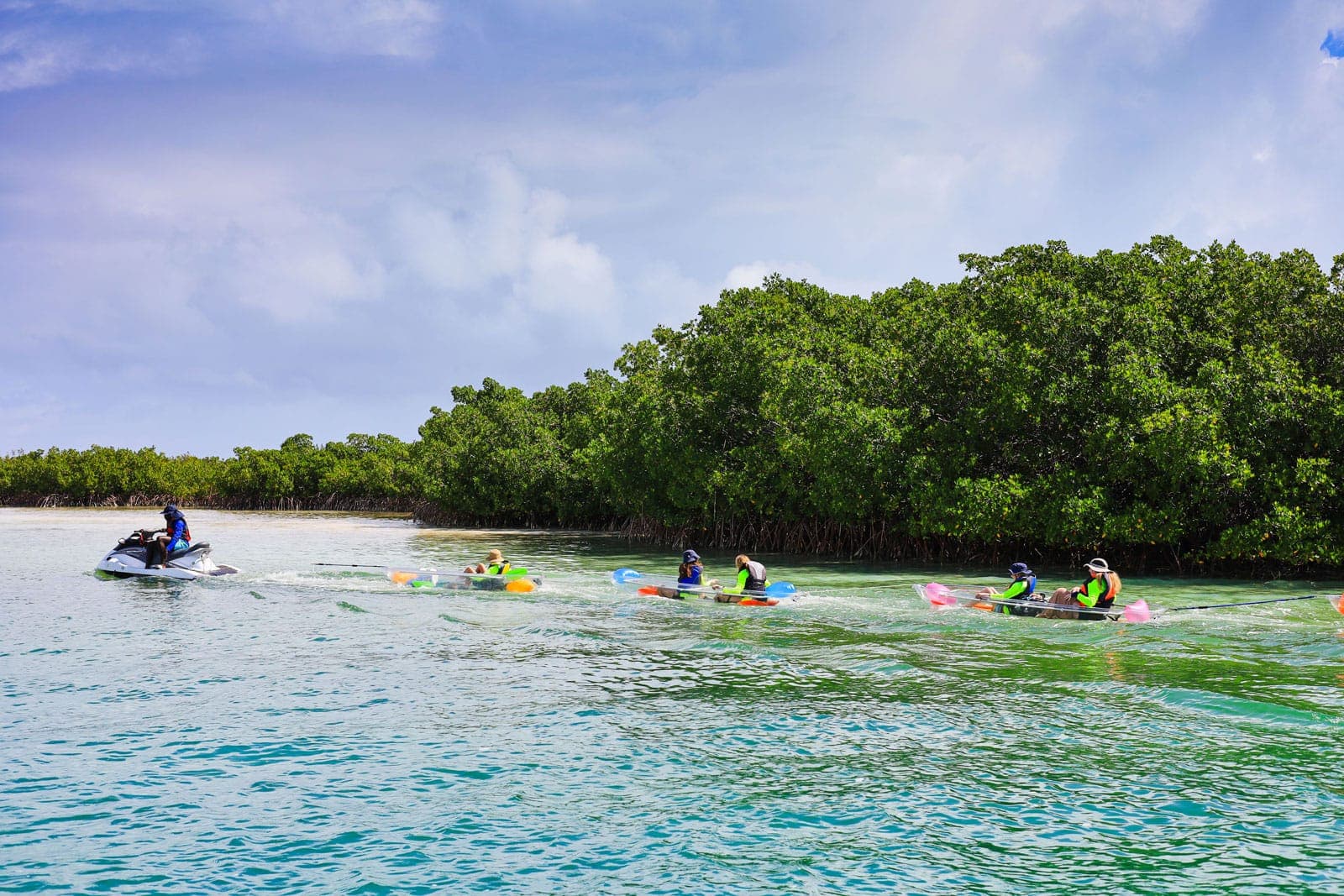
On the two-hour Mangrove Tour you glide through the mangrove channels behind a guide who knows them well, looking straight down through the hull. Turtles, stingrays, young sharks, jellyfish, groupers and snappers all live here, and the clearer the water, the more you see.
The tour crosses the channel from the marina to Mangrove Cay’s red-mangrove estuary, calm enough for first-timers even when the open bay is breezy, and the guide points out what’s below as you go. Most people are paddling in a straight line within a few minutes, and a double kayak lets a small child ride with a parent.
Clear kayak tours in Providenciales

2. Iguana Island by kayak
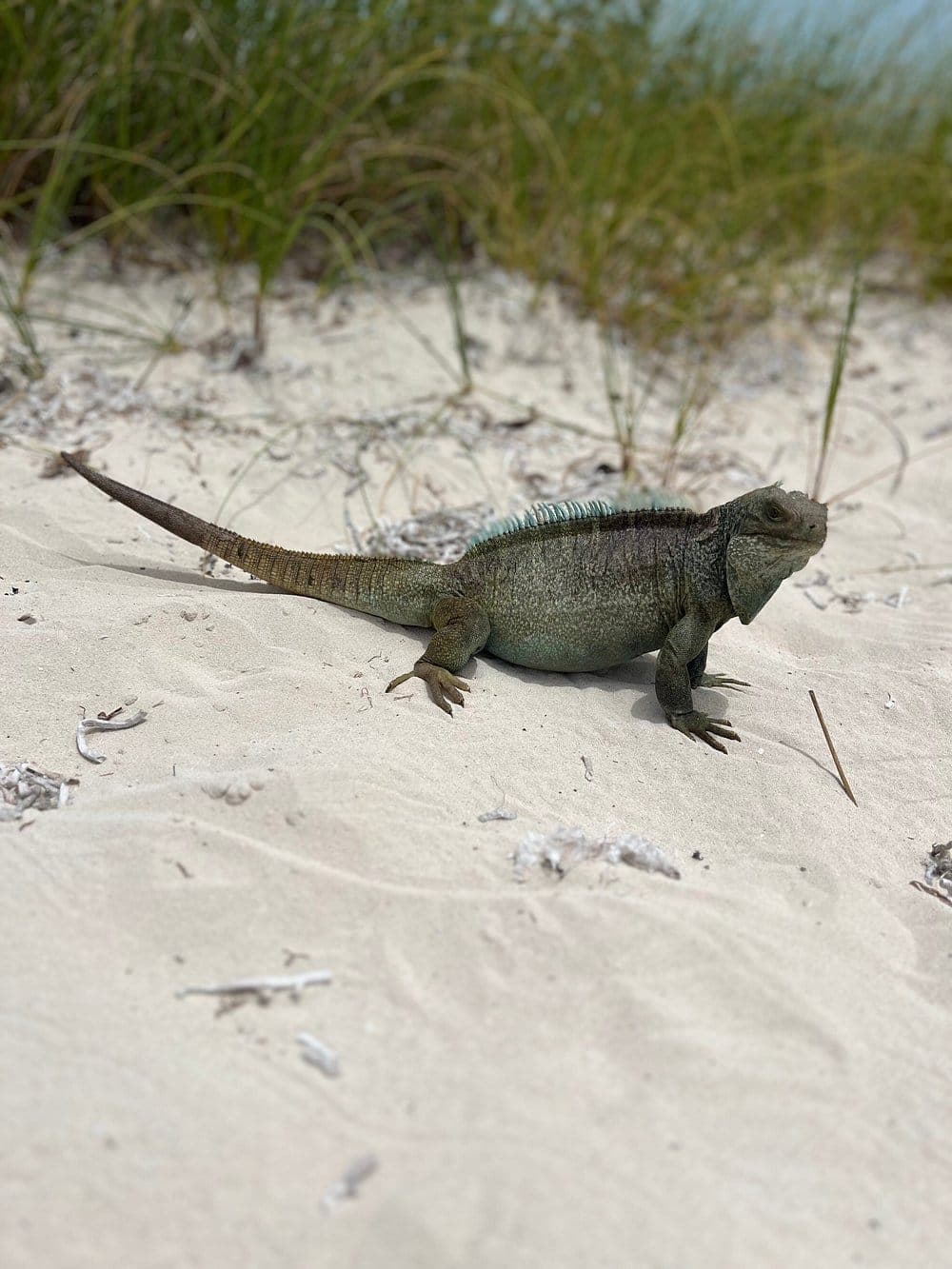
The three-hour tour starts in the mangroves, where you might spot sea turtles, lemon sharks, stingrays, conch and blue crabs, then heads to Iguana Island, where you land, see the iguanas up close and explore before paddling back. Little Water Cay is a protected part of Princess Alexandra National Park, and it’s home to the Turks and Caicos rock iguana, a species found nowhere else in the world.
About 3,000 of them live on Little Water Cay, by the National Trust’s count, which makes it the best place on earth to see this endangered lizard. The species once lived on cays right across the Caicos Bank, and its story is a warning: when dogs and cats arrived with hotel building on neighboring Pine Cay in the 1970s, that island’s iguanas, thousands of them, were all but gone within a few years. Little Water Cay bans pets, conservationists have worked for years to keep its rats down, and the boardwalks keep feet off the burrows.
Good to know
The iguanas are wild and protected. Don’t touch or feed them, stay on the boardwalks, and carry out anything you carried in: litter draws rats, and rats eat iguana eggs. The island is open Monday to Saturday, 10 am to 3:30 pm, so on a Sunday or afternoon tour, ask us before you book how the island stop works.
Kayak to Iguana Island
What a clear kayak tour costs
All-in for two adults, and for a group of four.
| Tour | Duration | Guests | All-in price |
|---|---|---|---|
| 2HR Mangrove Clear Kayak Tour | 2 hours | — | $285for 2 guests |
| 3HR Mangrove & Iguana Island Clear Kayak Tour | 3 hours | — | $308for 2 guests |
| 2HR Mangrove Clear Kayak Tour | 2 hours | — | $571for 4 guests |
| 3HR Mangrove & Iguana Island Clear Kayak Tour | 3 hours | — | $617for 4 guests |
- 2-Hour Kayak Tour
- Guests
- —
- All-in price
- $285for 2 guests
- 3-Hour Kayak Tour
- Guests
- —
- All-in price
- $308for 2 guests
- 2-Hour Kayak Tour
- Guests
- —
- All-in price
- $571for 4 guests
- 3-Hour Kayak Tour
- Guests
- —
- All-in price
- $617for 4 guests
All-in prices include taxes and fees, in the listing's currency, as of Nov 4, 2026.
Before you go
How the day runs
Tour times follow the tides rather than a fixed timetable, so the start you book is confirmed with your reservation and can shift with the weather. Plan to be at the marina 15 minutes before it. Your guide fits the life vests, runs through the paddle strokes and asks everyone to keep to the channels and off the roots, then leads the group out. Two hours covers the mangroves at an easy pace; the three-hour tour adds the crossing to Little Water Cay, which is short but open, so you feel the breeze there in a way you never do inside the channels.
What to bring
- A dry pouch or waterproof case for your phone. The listing asks for one, and the photos through the hull are the ones you’ll want.
- Polarized sunglasses, which cut the glare and let you see through the surface when the sun is high.
- Reef-safe sunscreen, a hat and a rash guard or light shirt: there’s no shade on the water.
- A towel for afterward and something on your feet for the Iguana Island boardwalks. Bottled water is included, and your own snacks are welcome.
- If anyone is near the limits, say so when you book: 250 lbs in a single kayak, 400 lbs in a double.
For most families, book the 3HR Mangrove & Iguana Island Tour: the mangroves and the landing on Little Water Cay in one morning, $154 an adult and $114 a child aged 3 to 12, so $536 for two adults and two children, with the clear kayak, all the safety equipment, an expert local guide and bottled water included. Short on time, or with very young paddlers? The 2HR Mangrove Tour is $143 an adult and $91 a child. Both leave from Heaving Down Rock Marina in Leeward, 5 to 15 minutes from Grace Bay, where there is a paid parking lot, and a round-trip shuttle from the Grace Bay area is $20 a person, arranged after booking and paid on the day. Booking is instant: the price includes the 12% tax, a deposit of $35 or $41 a person secures your seats, the balance is due to our charter management, and you can cancel free up to 24 hours before. Every tour on TCI Experiences is handpicked and verified for safety, service and upkeep.
Want more time on the water? Our guide to jet ski tours in Providenciales covers the shipwreck and the Caicos Cays, and half day or full day walks through a private charter, stop by stop.